14 November 2025
Pia Bernauer
Weekly SpinOn: Nights of Masks & Carnival

This week’s edition looks at how composers and librettists have approached ideas of masking, disguise and festive culture across different musical contexts. From Venice’s long-standing carnival traditions to the theatrical role-playing of Mozart’s operas and the structured celebrations of the Rhineland, these works reflect how music and public festivity have shaped each other over time.
The title “Nights of Masks and Carnival” refers both to the historical settings in which these pieces were created and to the recurring use of disguise and social play in musical and dramatic forms. The four recordings selected here take us through different parts of Europe, exploring these ideas from Venice’s nocturnal atmosphere to Vienna’s operatic role-playing and the carnival culture of the Rhineland.
Track 1: Flute Concerto in G minor, Op. 10/2 “La notte” – III. Largo & IV. Presto – Antonio Vivaldi
With our first track we start in Venice, a city whose carnival tradition is documented from the Middle Ages and became one of Europe’s most influential by the 17th century. Masks, costumes and public entertainments shaped the winter season, and the theatrical atmosphere of the city had a lasting impact on its musical life. While carnival was not invented in Venice, the Venetian version became widely known through its opera houses and public festivities.
Vivaldi composed the Op. 10 flute concertos in the late 1720s. Within this set, La notte stands out for its episodic structure and its sequence of sharply contrasting movements. The track used here combines the III. Largo and IV. Presto. The Largo is built on long sustained harmonies and very limited melodic motion, creating an atmosphere that aligns well with the more mysterious side of Venetian carnival. In Venice, masks were permitted for extended periods of the year, and the widely used bauta allowed complete anonymity in public spaces. Contemporary descriptions note that this masking culture softened social distinctions and encouraged playful forms of disguise. At the same time, the Venetian authorities issued regular regulations to manage mask-wearing during the season, reflecting how central — and how visible — these practices were in everyday life.
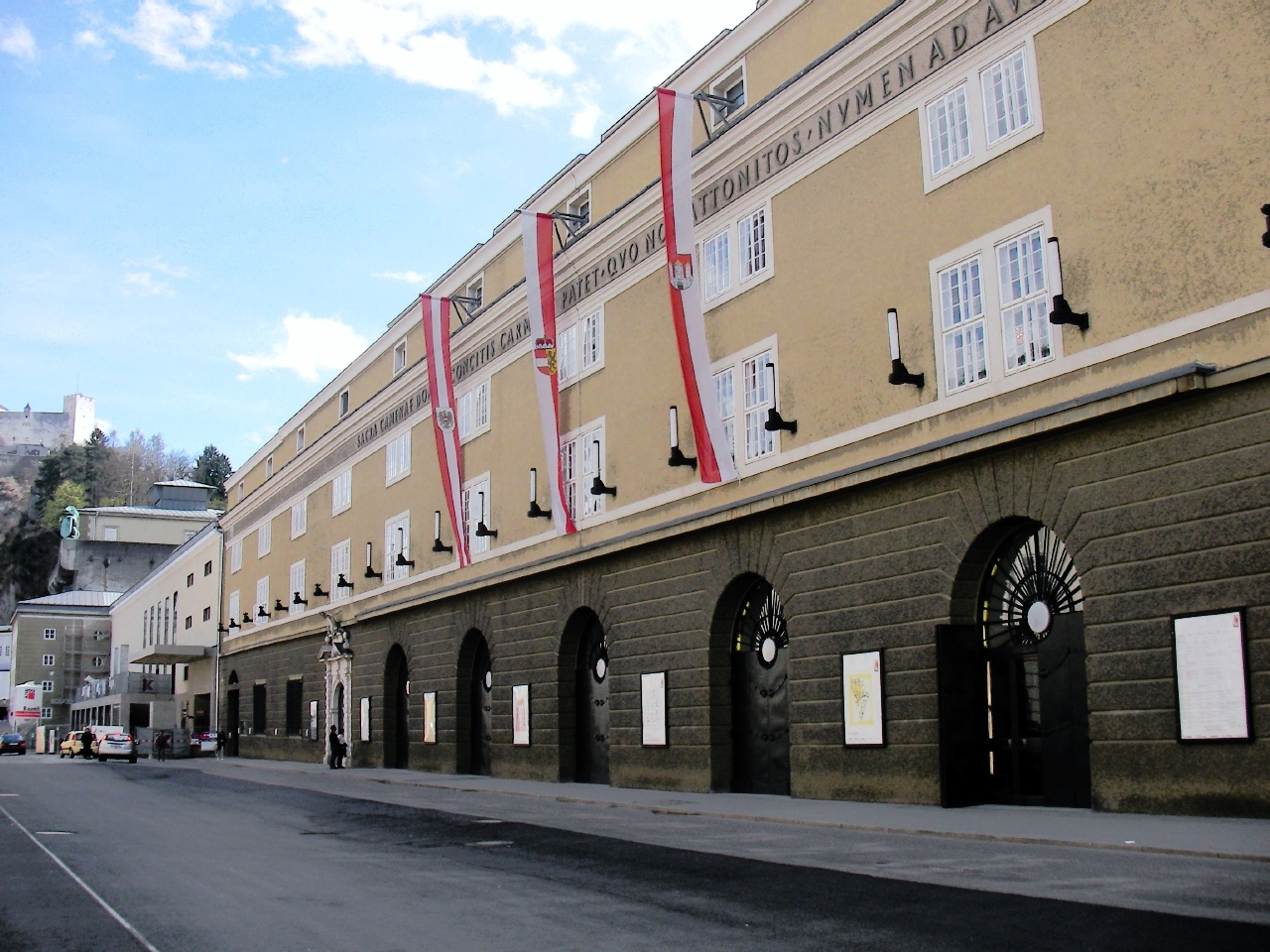
The following Presto interrupts the Largo’s static character with sudden pace and sharply profiled gestures. Heard together, the two movements highlight the episodic design of La notte, moving from a moment of masked calm to rapid activity, a contrast that mirrors the shifting moods typical of Venice’s long festive period. Karajan recorded La notte in 1983 with Andreas Blau, who had joined the Berliner Philharmoniker at the age of twenty and later became one of its defining principal wind players. The sessions were part of an early group of digital productions for Deutsche Grammophon, carried out only two years after Karajan had presented the Compact Disc to the international press on 15 April 1981 during the Salzburg Easter Festival. His advocacy for the new medium accelerated DG’s transition to digital recording, and the album released in 1984 documents one of the orchestra’s early contributions to this technological change.

DG
Next to the “Digital Recording” label on the album cover, another aspect is noteworthy: the image reproduces a 17th-century painting by Filippo Gagliardi and Filippo Lauri showing the festivities held in the courtyard of the Palazzo Barberini in Rome on 28 February 1656 to celebrate the arrival of Queen Christina of Sweden. Although unrelated to Vivaldi or Venice, its colourful processions and costumed groups echo the visual language of early modern public celebrations, including elements commonly associated with carnival.
Track 2: Così fan tutte, K. 588 – Act I: Sextet “Alla bella Despinetta” – Wolfgang Amadeus Mozart
With our second track we move from Venice to Mozart’s final decade in Vienna. Così fan tutte was written in 1789 and premiered in January 1790 at the Burgtheater. The opera belongs to the genre of dramma giocoso and centres on a plot driven by disguise and deliberate role-playing. The sextet “Alla bella Despinetta” appears early in Act I, at the moment when the two male protagonists return in disguise, initiating the experiment in which they attempt to test the constancy of their fiancées.

Characters from ‘Cosi fan tutte’ by Mozart, 1840, Johann Peter Lyser
The ensemble is characteristic of Così fan tutte. Mozart uses a light musical surface to frame a tightly organised dramatic situation. Each character has a clearly defined line, and the structure alternates between short reactions, coordinated exchanges and comic commentary. Harmonically the number is straightforward, allowing the clarity of the vocal interplay to remain at the forefront. The audience is always aware of the disguise; what matters is how the music shapes the unfolding social game on stage.
Karajan recorded Così fan tutte only once, in 1954, with the Philharmonia Orchestra and a cast including Elisabeth Schwarzkopf, Nan Merriman and Léopold Simoneau. The sessions took place in London’s Kingsway Hall under the direction of producer Walter Legge, whose approach to microphone placement and balance had a decisive influence on the sound of EMI’s recordings at the time. Karajan shaped the musical phrasing and ensemble blend, while Legge’s production style determined much of the recorded character. The sextet offers a clear example of the use of disguise and deliberate misdirection in opera libretti — a device that appears throughout operatic history and stands at the centre of Così fan tutte, linking this scene directly to the theme of masking and shifting identities explored in this week’s playlist.
Track 3: Gaîté parisienne – No. 8: Valse – arr. Manuel Rosenthal, after Jacques Offenbach
With our third track we turn to Paris, where public dancing, theatre and costumed entertainment played a central role in 19th-century urban culture. Jacques Offenbach was one of the most influential figures of this environment. His operettas shaped the city’s stage life with their mixture of satire, dance and social observation. Among these works, Orphée aux enfers (Orpheus in the Underworld) is particularly notable — not least because it contains the famous “Can-Can”, which later became emblematic of Parisian popular entertainment.

Vintage poster for French Can Can dancers
Gaîté parisienne was created in 1938 when conductor and composer Manuel Rosenthal assembled and orchestrated material from several Offenbach operettas for a ballet production of the Ballets Russes de Monte-Carlo. Much of the score draws on Orphée aux enfers, and the Valse (No. 8) reflects Offenbach’s melodic and rhythmic language, but with expanded orchestral colours and symphonic proportions. Rosenthal structures the waltz in contrasting sections, moving between flowing lyricism and more pointed rhythmic writing. Karajan’s recording with the Berliner Philharmoniker emphasises these contrasts with broad phrasing and a clear, full orchestral sound that presents the ballet suite as an independent concert work.
In the context of this week’s theme, the Valse represents the Parisian strand of masked and festive culture. While Gaîté parisienne does not portray a specific carnival event, it draws directly on Offenbach’s music for the operetta stages where costumed roles, exaggeration and theatrical display were central elements.
Track 4: Symphony No. 3 in E-flat major, Op. 97 “Rhenish” – V. Lebhaft – Robert Schumann
For our final track we move to the Rhineland, a region that remains the centre of German carnival traditions. Large cities such as Cologne and Düsseldorf developed a distinctive festive culture during the 19th century, marked by organised parades, committees and an increasingly public character. Robert Schumann composed his Third Symphony in 1850 shortly after taking up his post as municipal music director in Düsseldorf. Although the work is not connected to carnival directly, it reflects his first impressions of the region’s open, sociable and outward-facing atmosphere.

Portrait of Robert Schumann from his time in Düsseldorf.
The symphony acquired its familiar title, the “Rhenish”, shortly after its premiere. Schumann himself did not use the name, but contemporary critics and early publishers adopted it to underline the connection between the work and its place of origin. The Fifth Movement, Lebhaft, serves as a compact and energetic finale. Its repeated rhythmic figure, bright orchestration and constant forward motion give the music a collective, almost processional character — qualities that can easily be associated with the kind of public parades that later became central to Rhenish carnival culture, even though the symphony itself is not programmatic.
Karajan recorded the Rhenish only once, in 1971, with the Berliner Philharmoniker for Deutsche Grammophon. Unlike Schumann’s Fourth Symphony — which he recorded several times across different decades and under varying production conditions, resulting in notably different interpretative profiles — the Rhenish survives in a single version. Within this week’s theme, the movement represents the Rhenish dimension of festivity, and its connection to a region known for its public carnival celebrations provides a fitting close to a playlist centred on masking, festivity and shifting social identities.
— Pia Bernauer (Karajan Institute)