Herbert von Karajan

A Musical Icon

Karajan at a Glance

Herbert von Karajan was one of the most influential classical music artists of the twentieth century. As a world-renowned conductor, multifaceted artist, innovator, mentor, and intellectual explorer, he shaped the trajectory of classical music in lasting ways. Karajan combined artistic excellence with an insatiable curiosity about the potential of music and its impact on audiences and performers. His legacy continues to inform many aspects of our musical and cultural experience.

Chief Musical Director of Europe

Herbert von Karajan (1908-1989) was often described as the “Chief Musical Director of Europe,” following a career that led him from his hometown of Salzburg to the most influential positions in classical music. He held the position of principal conductor of the Berlin Philharmonic between 1955 and 1989, longer than any other conductor in the history of the orchestra. During this period, he was also artistic director of the Vienna State Opera from 1958 to 1964, artistic director of the Salzburg Festival from 1956-1960 and part of its board of trustees thereafter. He was a regular conductor of the Vienna Philharmonic and led them on unprecedented world tours. Before that, he was instrumental in building and shaping the Philharmonia Orchestra in London as a leading recording orchestra. In 1972, Karajan arranged the final movement of Beethoven’s Ninth symphony, “The Ode to Joy”, which was adopted as the Anthem of Europe and remains so today.

The Multifaceted Artist

From the very beginning of his career, Karajan was committed to shaping complete productions on stage. While he collaborated with many famous directors, such as Franco Zeffirelli, Giorgio Strehler, and John Schlesinger, he directed most of his opera productions himself. The Salzburg Easter Festival, founded by Karajan in 1967, was the ideal platform for such plans. As founder, manager, and financial producer, he enjoyed complete artistic autonomy. It is therefore fitting that Karajan started his first Easter Festival with Die Walküre, a work by Richard Wagner, a leading proponent of the concept of the “Gesamtkunstwerk”. This production was also performed at the Metropolitan Opera, New York in the same year – an early example of co-productions between institutions. 

The Music, Technology, and Business Visionary

Karajan wanted to bring classical music to a broader audience and had a lifelong fascination with technological innovation. He pioneered the adoption of new recording technologies for classical music, ranging from early stereophonic recording to multichannel production, and played an essential role in the development and promotion of the Compact Disc. In April 1981, Karajan invited the three companies involved in the development of the Compact Disc to Salzburg to present this new technology to the world. In 1967, he founded the Easter Festival in Salzburg and in the early 1970s he established the Orchestra Academy of the Berlin Philharmonic, known today as the Karajan Academy. He also created a new genre of music film by inviting film directors from other genres to make classical music films with him. Later, he founded his own film company “Telemondial”. He once remarked: ”I would like to have been born perhaps six or seven years later. I think there will be great developments over the next few years.”

The Mentor of a New Generation

Karajan was deeply committed to supporting and developing musical talent. In the 1970s, he initiated the Orchester-Akademie der Berliner Philharmoniker, a postgraduate program for young instrumentalists designed as a pathway into leading professional orchestras. In 2017, the program was officially renamed the Karajan Academy.

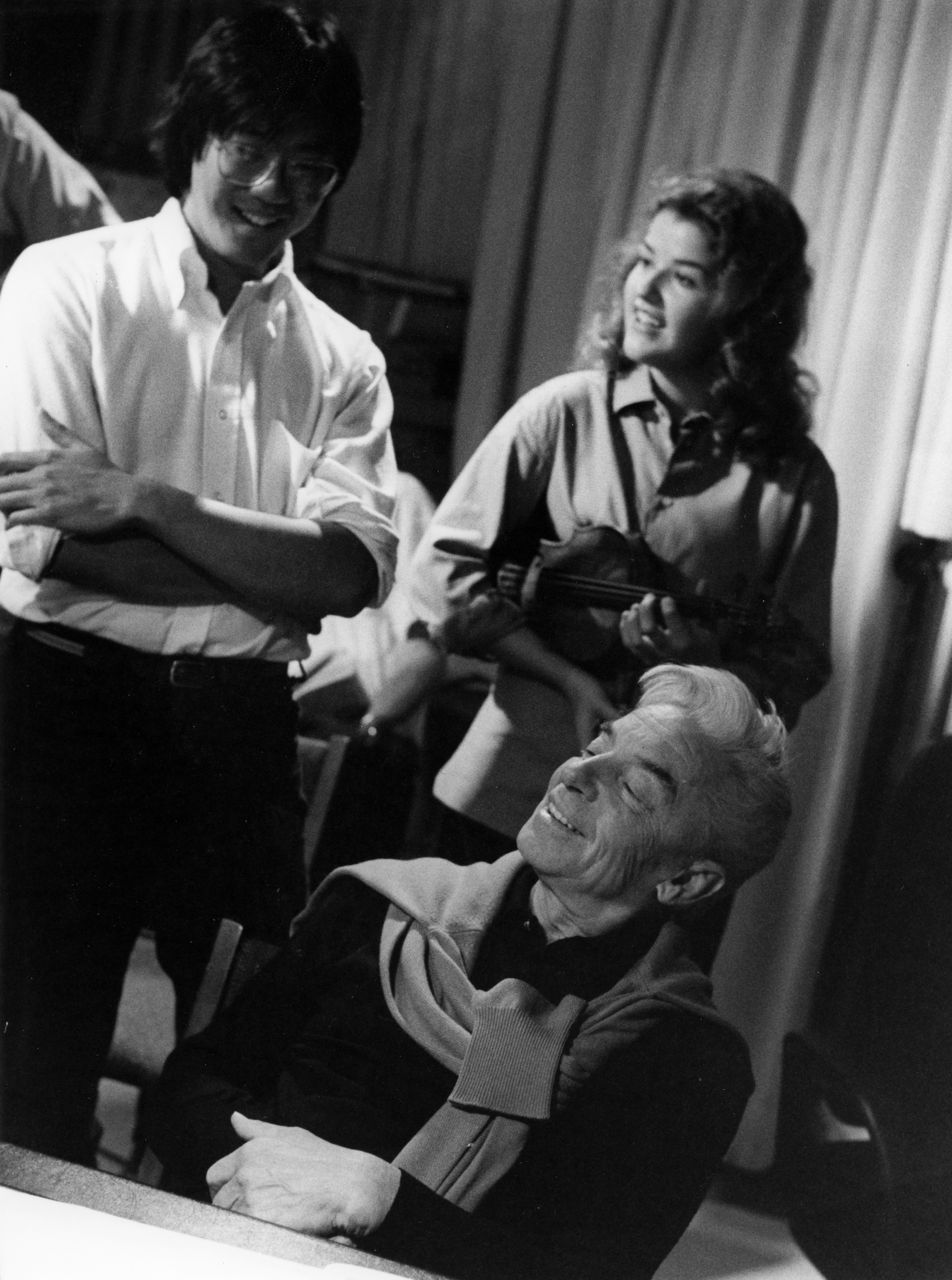
By providing early performance opportunities, Karajan enabled young instrumentalists to launch international careers. Notable examples include Anne-Sophie Mutter and Evgeny Kissin. He also broadened artistic participation by supporting exceptional talent regardless of political, social, or institutional background, including African American soprano Leontyne Price, Soviet musicians Mstislav Rostropovich and Sviatoslav Richter, as well as female artists such as Sabine Meyer, at a time when the profession remained largely male-dominated. In the postwar period, Karajan worked extensively with artists from a wide range of cultural and religious backgrounds, including Jewish musicians such as Yehudi Menuhin, Michael Schwalbé, and Szymon Goldberg.

Karajan also fostered the development of emerging conductors through teaching, mentoring, and leveraging his network, including the establishment of a prestigious international conducting competition. Many prominent conductors, such as Mariss Jansons, Valery Gergiev, Seiji Ozawa, and Christian Thielemann, benefited from his guidance early in their careers. The Herbert von Karajan Young Conductors Award at the Salzburg Festival continues this legacy today.

Music and Science

Karajan was intrigued by the effects of music on the human body and mind. He supported scientific inquiry in this field by providing funds and resources, as well as participating personally as a test subject.  During these experiments, Karajan’s physiological responses—such as heart activity, galvanic skin response, pulse rate, respiration, and muscle tension—were measured while he conducted or listened to music. At the Salzburg Easter Festival, an annual scientific symposium was designed to bridge disciplines by bringing together researchers from fields including psychology, medicine, and music studies. At Karajan’s initiative, a research institute was established to investigate the psychological and physiological effects of music, first at the University of Salzburg and later relocated to Vienna. Through his sustained interest, patronage, and intellectual engagement, Karajan contributed significantly to the early development of interdisciplinary research at the intersection of music, psychology, and neuroscience.

 Download the full curriculum vitae of Herbert von Karajan here!

Read More

Agnes BaltsaAlban BergAlexander BorodinAlexis WeissenbergAnna Tomowa-SintowAnne-Sophie MutterAnton BrucknerAnton DermotaAnton von WebernAntonín DvořákMore

Stay Informed