08 May 2026
Pia Bernauer
Weekly SpinOn: Mothers
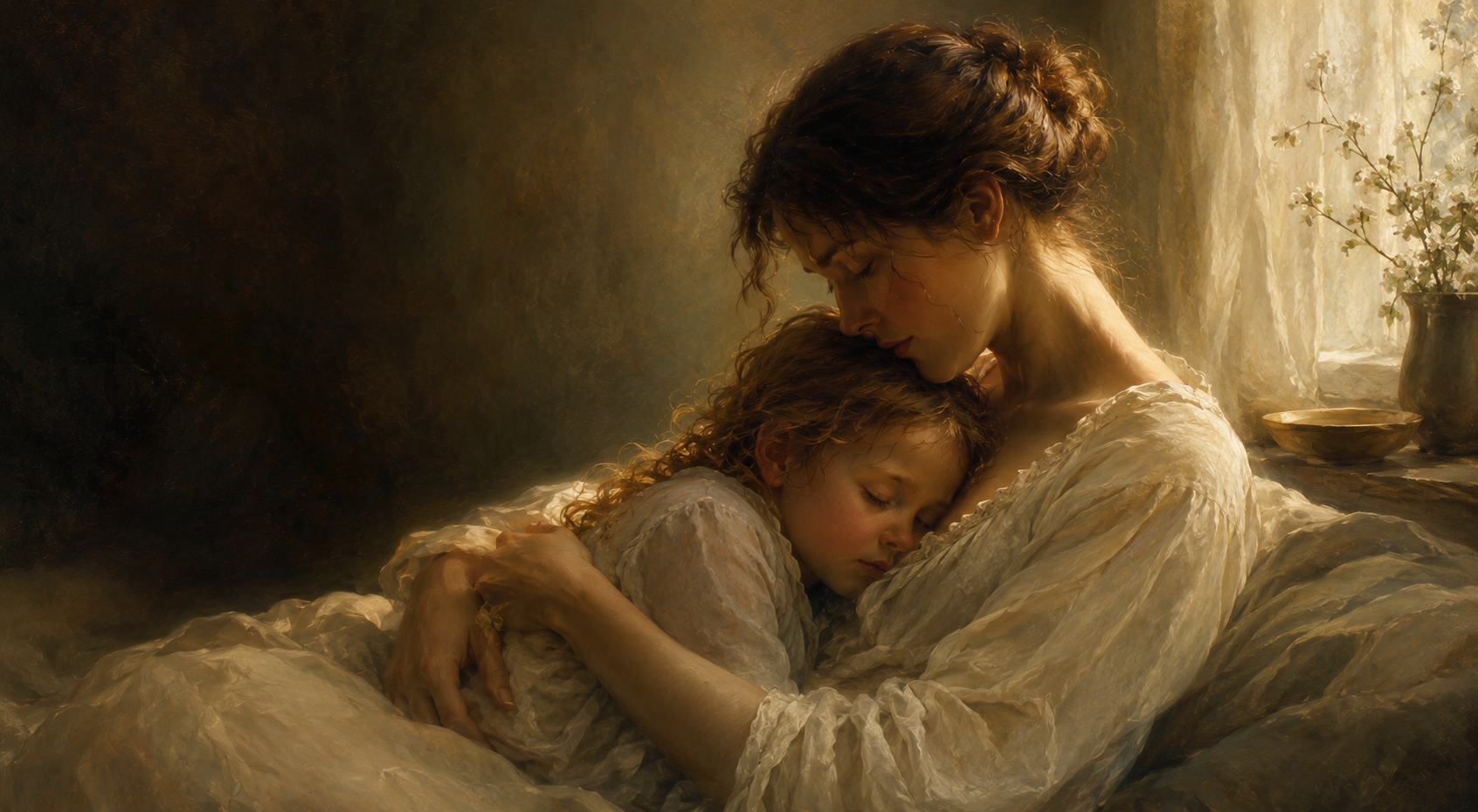
Motherhood appears surprisingly often in classical music — just rarely in direct form. Composers often approach the subject through lullabies, prayers, childhood memories, or music connected to comfort and protection. Brahms, for example, added the most personal movement of his German Requiem shortly after his mother died in 1865. And Humperdinck’s opera Hänsel und Gretel began with fairy-tale texts written by his sister Adelheid Wette for a family performance.
This week’s playlist brings together four different representations of motherhood in classical music: the protection of Hänsel und Gretel, the family world of Richard Strauss’s Sinfonia domestica, Brahms’s music of consolation, and Verdi’s portrait of the Virgin Mary as a universal mother figure.
Track 1: Hänsel und Gretel, Act 2: “Abends, will ich schlafen gehn” – Humperdinck
Elisabeth Grümmer · Elisabeth Schwarzkopf · Philharmonia Orchestra · Herbert von Karajan
To start our journey through the theme of motherhood, we begin with a moment of pure comfort. In the opera Hänsel und Gretel, the children find themselves lost and alone in the dark forest. Before they fall asleep, they sing this “Evening Prayer.” While their own mother is far away, the scene captures the emotional core of motherhood: the feeling of being protected, watched over, and safe even in uncertainty.
Engelbert Humperdinck composed the opera in the early 1890s, based on the Grimm brothers’ fairy tale. The libretto was written by his sister Adelheid Wette, who originally intended some of the songs as simple family entertainment for her children.
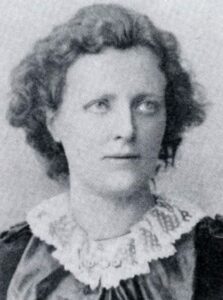
Adelheid Wette
Humperdinck later expanded the material into a full opera. Premiered in Weimar in 1893 under the direction of Richard Strauss, Hänsel und Gretel quickly became one of the most successful German operas of its time. The result is music that feels both homespun and grand — folk melodies wrapped in the kind of orchestral warmth Humperdinck had clearly absorbed during his years working alongside Wagner.
That mixture is especially evident in the “Abendsegen.” The melody itself is simple and almost hymn-like, but the orchestral writing surrounds it with warmth and glowing colour. In the scene, Hänsel and Gretel pray for fourteen angels to protect them through the night, transforming fear into reassurance.
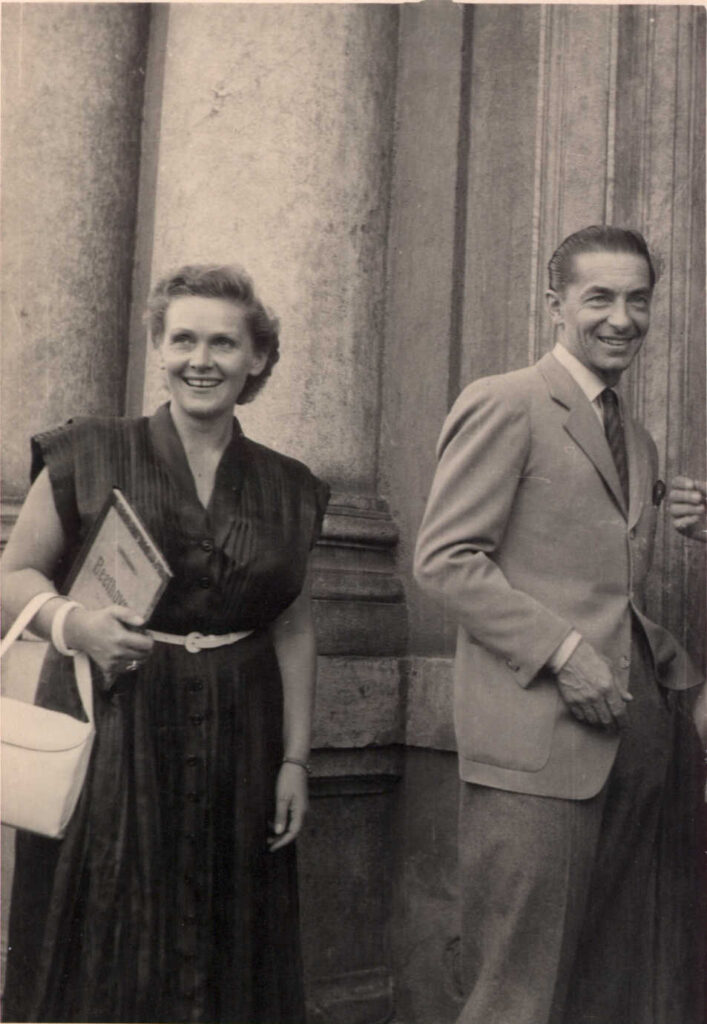
Elisabeth Schwarzkopf and Herbert von Karajan, 1950 ©Zofia Mosur, Foto orig. by Gertrude Zoika, Karajan-Archive
The recording was made in London’s Abbey Road Studios between June and July 1953 with Elisabeth Schwarzkopf and Elisabeth Grümmer as Hänsel and Gretel, the Philharmonia Orchestra under Herbert von Karajan, and children’s choruses from Loughton High School for Girls and Bancroft’s School. Released by EMI, it remains the only complete studio recording of Hänsel und Gretel ever conducted by Karajan. The production belongs to the early period of his opera recordings, reflecting the postwar expansion of the LP format, which made complete opera recordings increasingly accessible to a wider audience. Schwarzkopf and Grümmer resist the temptation to play it big — the scene stays close, almost whispered — while Karajan emphasizes warmth of orchestral colour and continuity of phrasing rather than fairy-tale spectacle.
Track 2: Sinfonia domestica, Op. 53: Scherzo. Munter – Wiegenlied – Strauss
Berliner Philharmoniker · Herbert von Karajan
After the “Evening Prayer,” we move from a fairy-tale forest into the heart of a real home. There is also a direct historical connection between the two works: Richard Strauss was a great admirer of Humperdinck and, as mentioned before, conducted the world premiere of Hänsel und Gretel in Weimar in 1893. More than a decade later, Strauss approached similar themes from a completely different perspective in his Sinfonia domestica.
Composed between 1902 and 1903, the work is one of Strauss’s most personal orchestral pieces. Instead of mythology, heroes, or philosophical subjects, he focuses on everyday domestic life. The score portrays a family household over the course of a single day, including the parents, the child, shared meals, arguments, play, and finally the evening lullaby. At the time, many critics found the idea almost ridiculous: why point a Wagnerian orchestra at a baby’s bath?
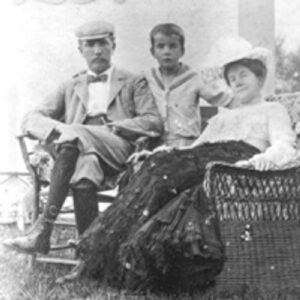
Richard Strauss, son Franz (“Bubi”), and wife Pauline
The “Wiegenlied” (“Lullaby”) section forms the emotional centre of the work. After energetic and often playful orchestral episodes, the music suddenly becomes intimate and gentle. Strauss softens the orchestral texture and allows long, flowing lines to emerge, creating the atmosphere of a child slowly being lulled to sleep. Unlike Humperdinck’s prayer in the previous track, this is not an imagined or symbolic scene. It’s the same feeling as the image on this week’s playlist: not motherhood as symbol, but as habit.
The recording was made in Paris in June 1973 with the Berliner Philharmoniker under Herbert von Karajan and released by EMI. It remains the only commercially released recording of Sinfonia domestica conducted by Karajan. The sessions took place during one of the orchestra’s Paris tours, when recording abroad had become increasingly common for major international orchestras and labels.
Track 3: Ein deutsches Requiem, Op. 45: 5. “Ihr habt nun Traurigkeit” (“Ye Now Have Sorrow”) – Brahms
Gundula Janowitz · Berliner Philharmoniker · Herbert von Karajan
While our previous tracks celebrated mothers in the joy of life, Johannes Brahms touches on a deeper, more universal truth: the lasting power of a mother’s comfort after she is gone. The fifth movement of Ein deutsches Requiem forms the emotional centre of the work and includes one of its most important lines: “As one whom his mother comforteth, so will I comfort you.” Brahms added this movement after his mother died in 1865.
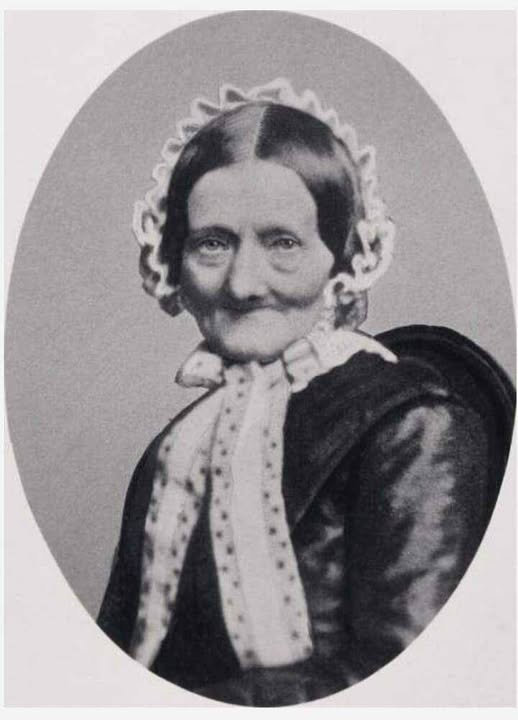
Johanna Henrika Christiane Nissen (1789-1865), mother of Johannes Brahms
Unlike the traditional Latin requiem mass, Brahms’s German Requiem is not centred on fear of judgment or the salvation of the dead. Instead, the work focuses on the living — on grief, comfort, and human consolation. Brahms selected the biblical texts himself from Martin Luther’s German translation of the Bible, shaping the work around themes of mourning and reassurance rather than liturgical ritual.
“Ihr habt nun Traurigkeit” (“Ye Now Have Sorrow”) stands apart within the larger structure of the Requiem. After the darker and more dramatic movements surrounding it, the music suddenly becomes lighter and more intimate. The soprano solo enters almost like a voice of reassurance, supported by softly flowing orchestral lines and delicate choral writing. Rather than creating grand symphonic drama, Brahms concentrates on warmth, continuity, and calm.
The recording was made in Berlin’s Jesus-Christus-Kirche in May 1964 with Gundula Janowitz, baritone Eberhard Wächter, the Berliner Philharmoniker and the Singverein der Gesellschaft der Musikfreunde in Wien under Herbert von Karajan. It is still regarded as one of the great achievements of Karajan’s discography and among the finest choral recordings of the 1960s.
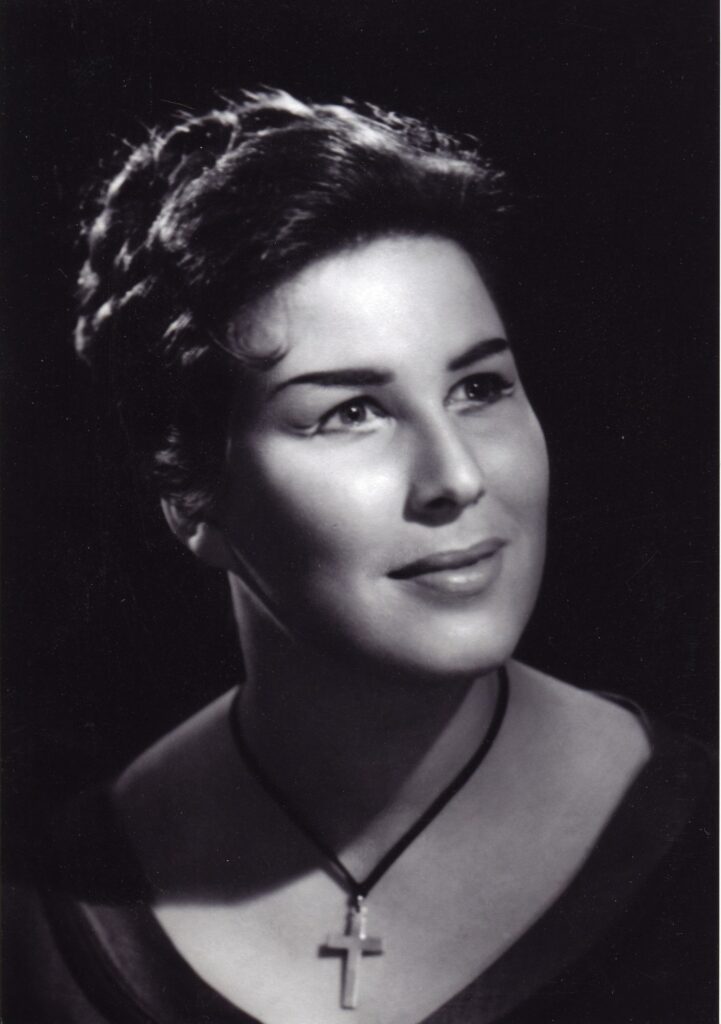
Gundula Janowitz, 1962, ©Photo Fayer; Karajan-Archive
Much of that reputation is connected to Gundula Janowitz’s singing. Her tone — unusually pure, almost weightless — sounds less like singing than like reassurance itself. Equally important is the warm acoustic of the Jesus-Christus-Kirche, which gives both orchestra and choir exceptional transparency and depth. The recording also captures Karajan at a unique artistic moment. By the mid-1960s, his orchestral sound already possessed its famous polish, while still retaining a strong Romantic warmth that gives Brahms’s music remarkable emotional immediacy.
Track 4: Otello, Act 4: “Ave Maria, piena di grazia” (Hail Mary, full of grace) – Verdi
Mirella Freni · Herbert von Karajan · Berliner Philharmoniker
Our journey through motherhood concludes by moving from the personal to the universal. While the previous tracks focused on human mothers — whether in fairy tales, family life, or memory — this final selection turns to the ultimate maternal figure of Western culture: the Virgin Mary. In the final act of Otello, Desdemona senses that tragedy is approaching. Shortly before her death, she turns to prayer and sings the “Ave Maria.”
Verdi places the scene at the end of the opera, directly before the final tragedy unfolds. Unlike many large ensemble scenes elsewhere in Otello, the focus here is entirely on a single voice and a private moment of reflection. The text of the prayer addresses Mary not simply as a religious figure, but specifically as a source of mercy and protection. Motherhood here has no face, no memory attached to it. Just the idea of shelter.
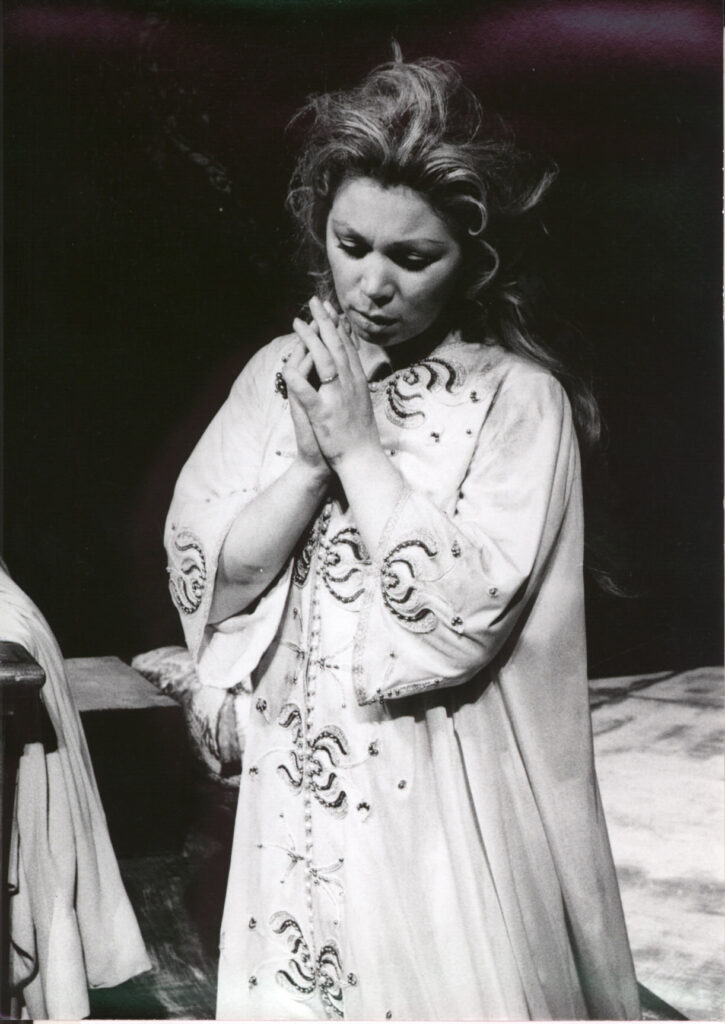
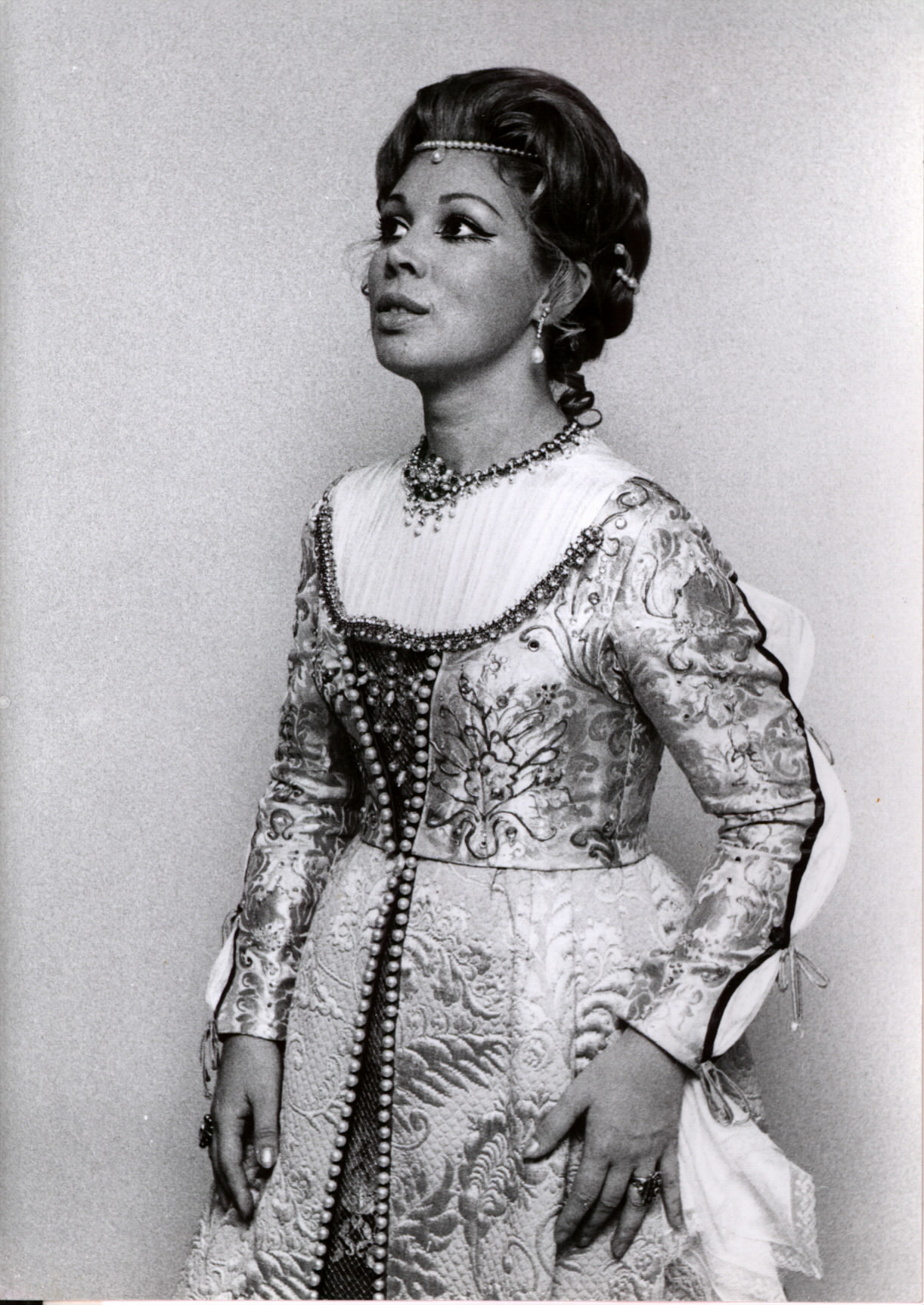
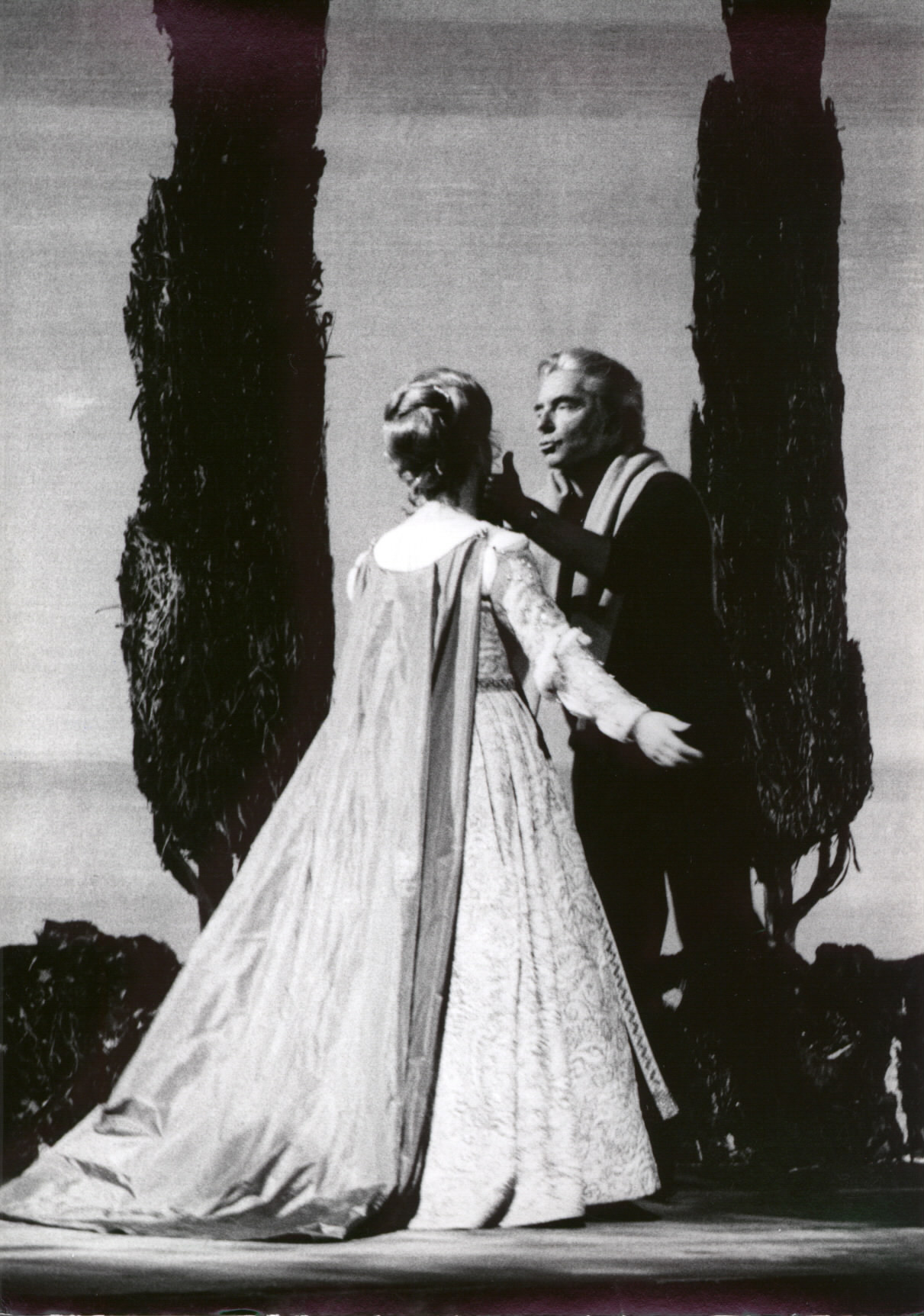
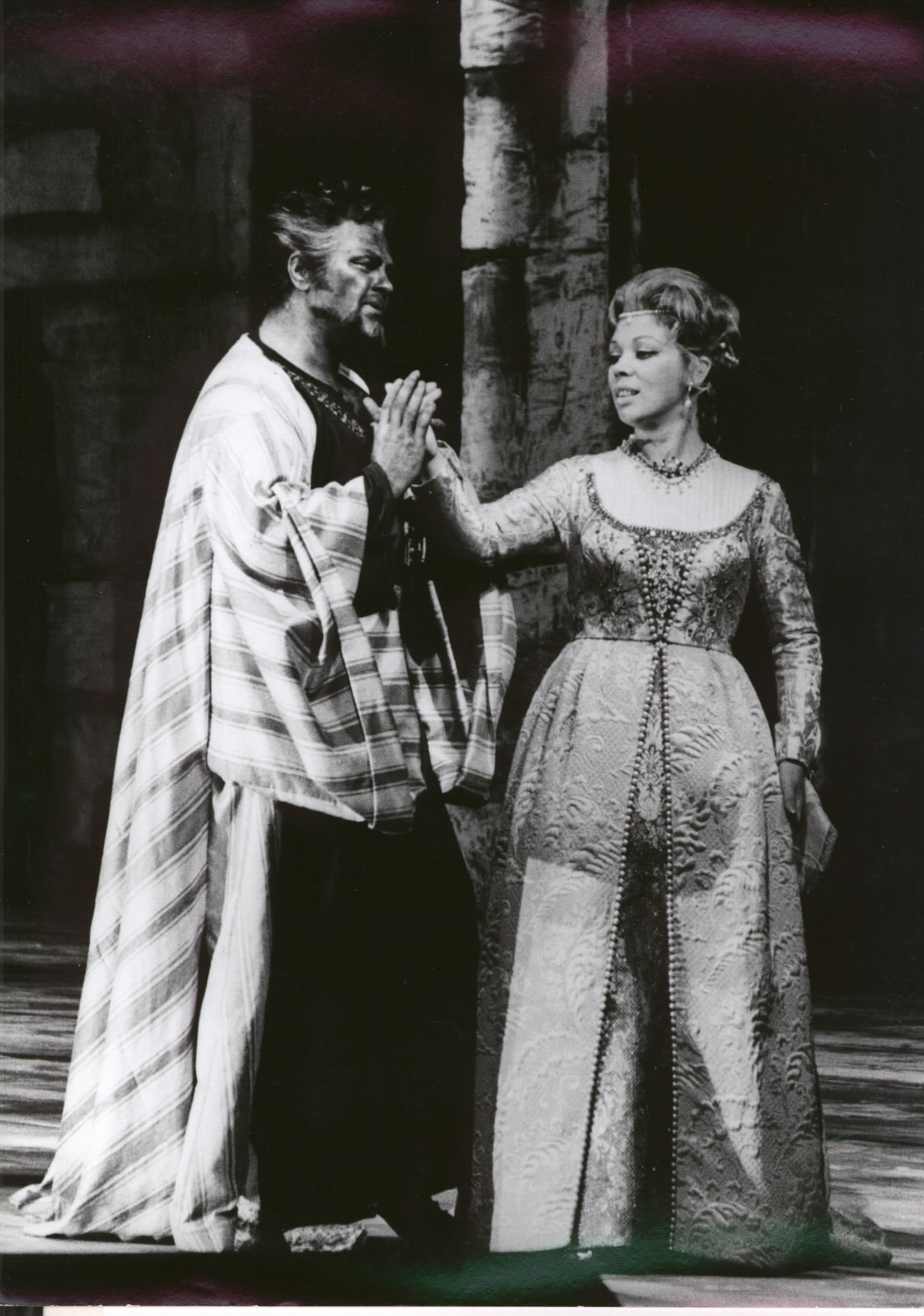
Mirella Freni as Desdemona, ©Foto Ellinger; Karajan-Archive
The recording was made in Berlin between April and May 1973 with Mirella Freni as Desdemona, the Berliner Philharmoniker and Herbert von Karajan, and released by EMI in 1974. The production later became closely associated with Karajan’s film version of Otello, created during the same artistic period. Freni was one of Karajan’s most important operatic collaborators of the 1970s, particularly in Italian repertoire. The recording has recently been rereleased by Warner Classics as a digital release on major streaming platforms.
— Pia Bernauer (Karajan Institut, Salzburg)