27 March 2026
Pia Bernauer
Weekly SpinOn: Gods and Men
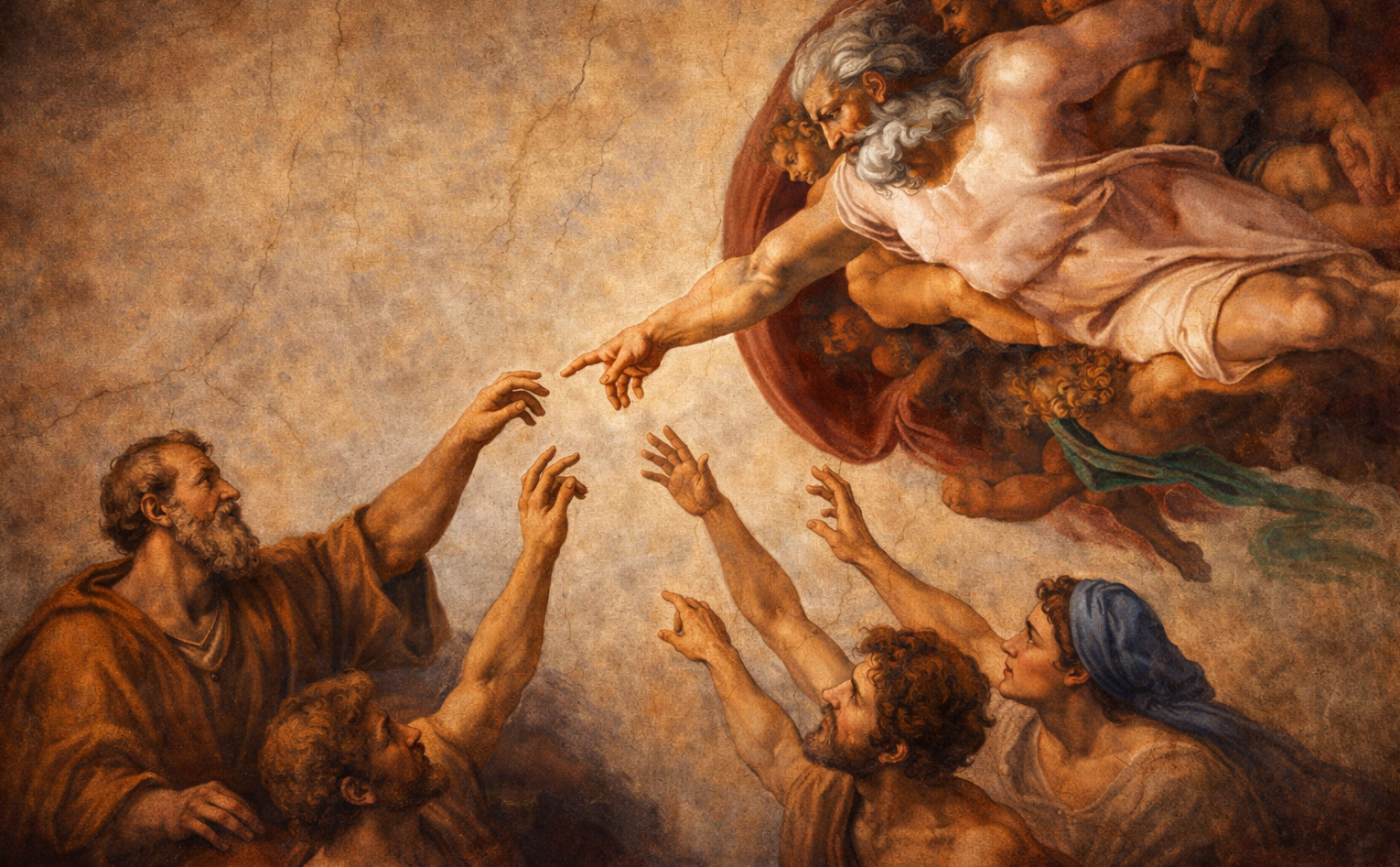
The relationship between gods and men is one of the oldest themes in human thought. Myths describe gods who rule the world, religion speaks of a single divine presence, and philosophy questions how humans relate to both.
Music has found different ways to approach this idea. It can present the world of the gods, reflect human thought, or give voice to a direct encounter between man and the divine.
This week’s playlist brings together four works that explore these perspectives from different angles.
Track 1: Das Rheingold, Scene 2: Introduction – Wagner
Berliner Philharmoniker · Herbert von Karajan
With this track, we enter the world of the gods for the first time in Wagner’s *Ring* cycle. The setting shifts from the Rhine in the first scene to an open landscape high in the mountains. Wotan and Fricka are lying asleep in front of Valhalla, the newly built fortress of the gods.
Valhalla stands at the center of this scene. It is the seat of the gods and one of the main places of the entire cycle. From here, their actions and decisions shape the course of the story.
The orchestra marks this change of place clearly. Broader and more stable musical lines replace the flowing sound of the Rhine. The texture becomes more compact, with a strong presence of brass and low strings.
A central element in this passage is the Valhalla motif. It appears in the brass and is closely connected to the fortress. The motif has a clear, rising shape, built from distinct intervals. Played by the brass, it gives the music a firm outline and a strong, grounded sound, very different from the more fluid texture of the first scene.
The introduction leads directly into the dialogue between Wotan and Fricka, where the focus turns to Valhalla and the agreement that made its construction possible.
This recording was made in December 1967 with the Berlin Philharmonic in the Jesus-Christus-Kirche in Berlin and released by Deutsche Grammophon in 1968. At the Salzburg Easter Festival, Das Rheingold was presented in 1968, in the second year of the festival, after Die Walküre had opened the project in 1967.
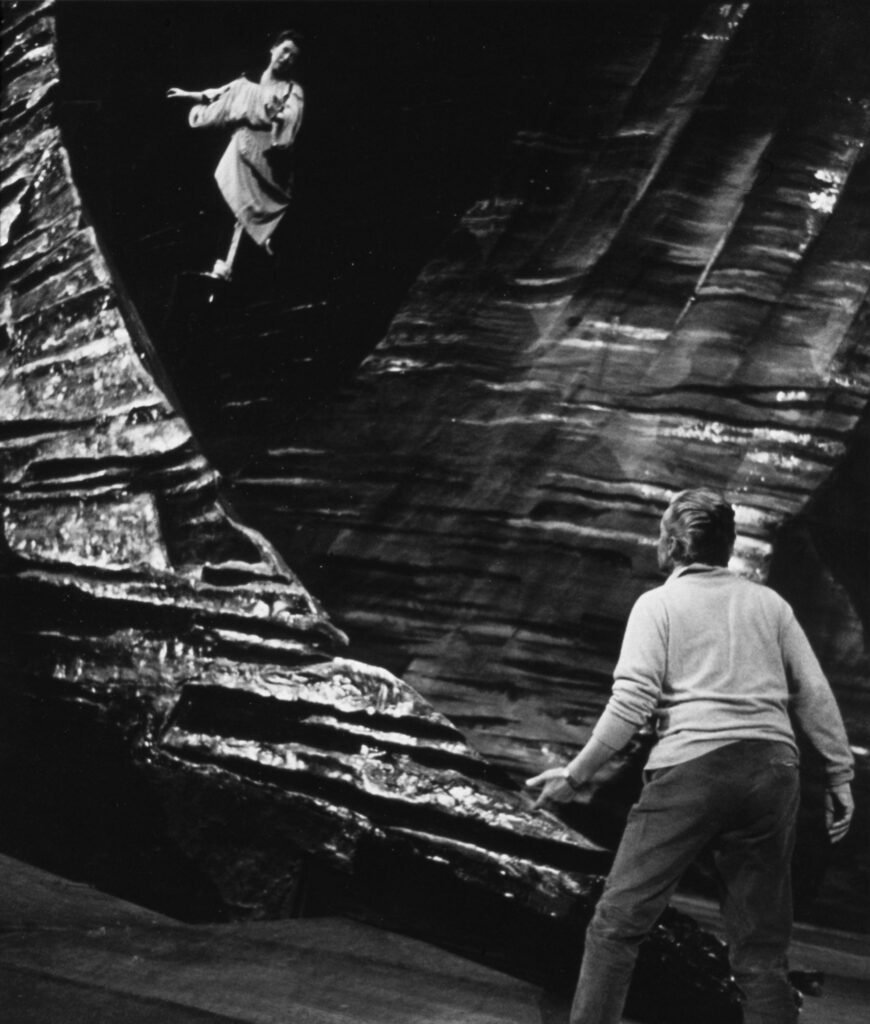
1968 – Rheingold: Rehearsal Photo
Karajan with the ‘floating’ Rhine Maiden ©Siegfried Lauterwasser; Karajan Archive
In this opening track, Wagner presents the world of the gods and their central place: Valhalla. With the next track, we turn from the gods to men.
Track 2: Also sprach Zarathustra – Introduction – Richard Strauss
Berliner Philharmoniker · Herbert von Karajan
Richard Strauss based Also sprach Zarathustra on the philosophical work by Friedrich Nietzsche. At the center of this text stands the figure of Zarathustra, who speaks about human existence, knowledge and development.
Nietzsche’s book does not tell a continuous story. It is made up of short texts that present ideas and reflections rather than a narrative plot. Strauss does not set this text directly to music. Instead, he translates some of its central ideas into an orchestral work.
The composition is therefore not built as a story with a clear sequence of events. It is structured in separate sections, each with its own title, referring to different aspects of Nietzsche’s text.
The opening section, Sunrise, begins with a low, sustained sound in the organ and double basses. Above this, the brass introduces a clear, rising figure. The orchestra expands quickly, moving from a quiet beginning to a full and bright sound. This passage is built on a simple and clearly shaped musical idea. The rising intervals in the brass create a strong outline, while the harmony moves from a dark tonal area to a bright one. The contrast between low and high registers plays a central role in shaping the sound.
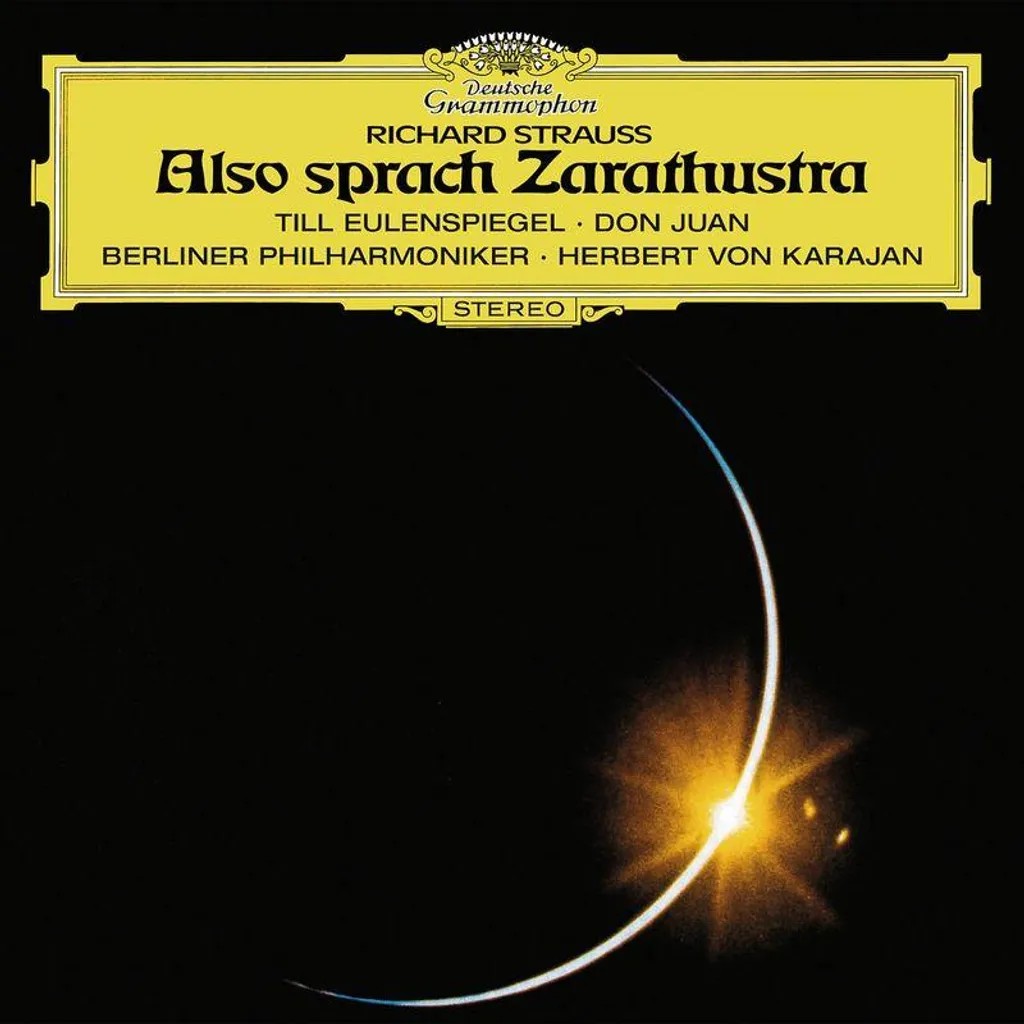
Herbert von Karajan recorded Also sprach Zarathustra with the Berlin Philharmonic in 1973 for Deutsche Grammophon in the Berlin Philharmonie. This recording is one of his central interpretations of Strauss’s orchestral works.
From this focus on human thought, the next track moves further into action, where a human figure directly confronts divine authority.
Track 3: The Creatures of Prometheus – Overture – Ludwig van Beethoven
Berliner Philharmoniker · Herbert von Karajan
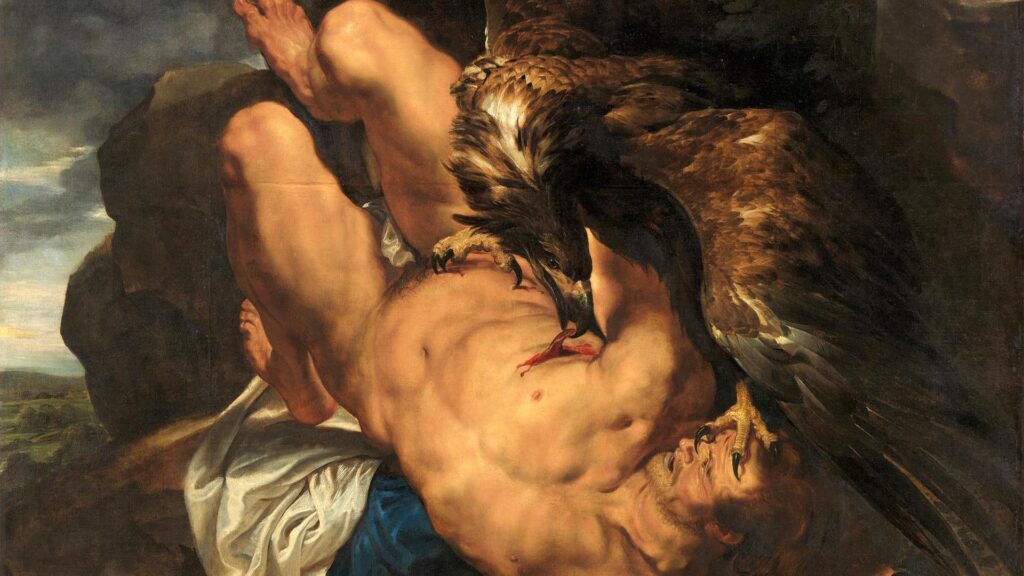
“Prometheus” by Peter Paul Rubens and Frans Snyders (Eagle)
Ludwig van Beethoven’s The Creatures of Prometheus is based on a figure from Greek mythology. Prometheus is one of the Titans. He steals fire from the gods and gives it to mankind. In doing so, he enables humans to develop skills, knowledge and culture. For this act, he is punished by Zeus: chained to a rock, his liver is eaten each day by an eagle and grows back each night.
Beethoven’s work was written in 1801 as a ballet for the Burgtheater in Vienna. The libretto was created by the choreographer Salvatore Viganò. In this version of the story, Prometheus creates two human beings and brings them to Mount Parnassus. There, they are introduced to the arts — music, poetry and dance — and become fully human through learning.
The overture introduces this ballet. Today, it is usually performed on its own in the concert hall and is less well known than Beethoven’s symphonies.
Herbert von Karajan recorded the overture with the Berlin Philharmonic on 2 and 3 January 1969 in the Jesus-Christus-Kirche in Berlin. The recording was released by Deutsche Grammophon in 1970 as part of his cycle of Beethoven overtures.
From ancient mythology, the final track moves into a different context, shifting from the world of Greek gods to the Christian faith.
Track 4: St Matthew Passion – Erbarme dich – Johann Sebastian Bach
Berliner Philharmoniker · Herbert von Karajan
Finally, we arrive in a new religious context — the world of Christianity and the Bible. After the many gods of ancient myths, there is now only one God. The relationship between heaven and earth becomes more direct and more personal.
The aria Erbarme dich appears at one of the most human moments in the Gospel story. Peter, one of Jesus’s closest followers, has promised to stay faithful. But when Jesus is arrested, fear takes over. Three times, Peter says that he does not know him. Then a cock crows. At that moment, Peter remembers Jesus’s words and understands what he has done. He begins to cry. Bach places the aria here, giving space to this moment of realization and to the plea for mercy that follows.
In this aria, the voice addresses God directly. At the same time, the story itself brings both worlds together: in the Christian belief, God appears in human form as Jesus Christ, present among his followers. This bridge between the divine and the human gives the music its emotional power and spiritual depth.
The St Matthew Passion accompanied Herbert von Karajan throughout his career. He conducted the work already in the post-war years, including a performance with the Wiener Symphoniker at the Musikverein in Vienna on 9 June 1950, and returned to it repeatedly in later decades.
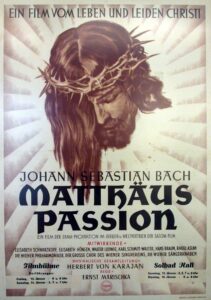
In 1948, he was involved in one of the earliest film versions of the Passion, directed by Ernst Marischka — a pioneering attempt to bring Bach’s sacred music to the screen. The film does not show a staged performance; instead, it combines Bach’s music with images of religious paintings and sculptures, creating a visual reflection of the biblical story.
The recording chosen for this playlist was made in 1971 and 1972 in the Jesus-Christus-Kirche in Berlin and released the following year by Deutsche Grammophon. The alto solo in Erbarme dich is sung by Christa Ludwig. The full recording features Gundula Janowitz, Peter Schreier, Horst Laubenthal, Walter Berry, and Dietrich Fischer-Dieskau, with the Singverein der Gesellschaft der Musikfreunde in Wien and the Berliner Philharmoniker. The work was also part of the programme of the Salzburg Easter Festival in 1972.
As the final track, Erbarme dich closes the Gods and Men playlist with a direct encounter between man and God — a moment where human weakness and divine mercy meet.
— Pia Bernauer (Karajan Institute)-
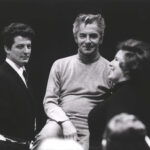
- HvK with Werner Krenn and Gundula Janowitz during the recording of J.S. Bach’s “St. Matthew Passion,” Berlin 1972
-
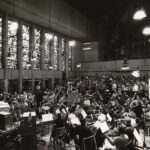
- HvK conducts the BPO during the recording of the St. Matthew Passion; behind them are the Singverein of the Gesellschaft der Musikfreunde and the Chorus of the Deutsche Oper Berlin
-
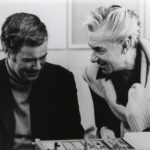
- HvK with D. Fischer-Dieskau at a rehearsal of J.S. Bach’s “St. Matthew Passion” (Easter Festival 1972)
-
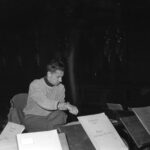
- HvK (wearing a turtleneck) during a rehearsal of J. S. Bach’s St. Matthew Passion with the WPh
-
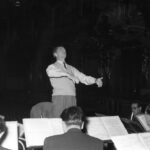
- HvK (wearing a shirt and tie!) during a rehearsal of J. S. Bach’s St. Matthew Passion with the WPh
-
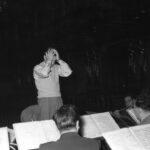
- HvK (wearing a shirt and tie!) at a rehearsal of J.S. Bach’s St. Matthew Passion with the WPh (clasping his hands above his head)