29 May 2026
Pia Bernauer
Weekly SpinOn: Fate

“We know what we are, but know not what we may be.”
— Ophelia, Hamlet, Act IV, Scene 5
The cover image is inspired by Friedrich Heyser’s painting Ophelia, the tragic heroine of Shakespeare’s Hamlet. Ophelia speaks these words shortly before her death, reflecting on the uncertainty of human life. The question of fate has inspired composers for centuries, from the symphonies and operas featured in this week’s playlist to artists of our own time. Most recently, Ophelia herself has reappeared in contemporary pop culture through Taylor Swift’s song The Fate of Ophelia. The song’s visual imagery also echoes the famous depiction of Ophelia floating in the water
In this week’s playlist, we explore four works of classical music that reflect on fate, destiny and the uncertainty of what lies ahead.
Track 1: Symphony No. 5 in C Minor, Op. 67 – I. Allegro con brio – Beethoven
Few opening passages in classical music are as recognizable as the first bars of Beethoven’s Fifth Symphony — known in the German-speaking world as the Schicksalssymphonie, the Symphony of Fate. Four notes are enough. They have been interpreted as fate knocking at the door, although Beethoven himself never confirmed the story. What is certain is that the symphony became one of the defining musical statements of the early nineteenth century.
Beethoven composed the work between 1804 and 1808, a period marked by political upheaval in Europe and by his growing struggle with hearing loss. The Fifth Symphony builds an entire dramatic structure from a remarkably simple musical idea. The famous opening motif returns again and again, shaping the movement from beginning to end. Rather than presenting a series of contrasting themes, Beethoven builds much of the music from a single rhythmic cell — the result is an unprecedented sense of unity and momentum.
The recording featured here occupies a special place in Herbert von Karajan’s discography. Made with the Wiener Philharmoniker in November 1948, it was one of his earliest major studio recordings after the Second World War. Recorded in Vienna between 11 and 17 November 1948 and released in 1950, it captures Karajan at the beginning of his international post-war career, working with an orchestra that would remain one of his closest musical partners for decades.

1946 ©Photo Fayer; Karajan-Archive
What makes this recording particularly right for a playlist on the theme of Fate is not just the music itself, but the moment it was made. Karajan’s career had been suspended after the war, and in 1948 his future was still uncertain. Hearing him conduct a symphony so bound up with the idea of facing an overwhelming force — at precisely the point where his own path could have gone either way — gives the performance an added weight that no later recording quite matches.
Listening today, one can already hear what would become central to Karajan’s Beethoven: the ensemble plays with precision, the music moves with purpose, and the architecture of the whole is always in view. The performance belongs to a moment when conductor and orchestra alike were part of rebuilding musical life in post-war Austria.
For a playlist on the theme of Fate, Beethoven’s Fifth is an obvious starting point. Not because we know exactly what those famous four notes mean, but because few works have so powerfully conveyed the feeling of confronting an overwhelming force and pushing forward regardless.
Track 2: Symphony No. 4 in F Minor, Op. 36 – I. Andante sostenuto – Moderato con anima – Tchaikovsky
If Beethoven’s Fifth Symphony became known as the Symphony of Fate through later interpretation, Tchaikovsky’s Fourth places the idea at the centre of the work itself.
Composed between 1877 and 1878, the symphony emerged during one of the most turbulent periods of the composer’s life. Within months, Tchaikovsky had entered a disastrous marriage, suffered a severe emotional crisis, and left Russia for a period of recovery abroad. At the same time, he began an extraordinary correspondence with his patron Nadezhda von Meck, to whom the symphony was dedicated.
In a famous letter, Tchaikovsky described the powerful brass fanfare that opens the work as a symbol of fate itself. It represents, he wrote, the force that stands in the way of happiness and prevents human beings from achieving complete fulfilment. Throughout the symphony, this idea returns repeatedly, interrupting moments of lyricism and hope.

Symphony No. 4 “For My Best Friend,” title page of the handwritten score
The first movement unfolds as a struggle between these opposing forces. Tender melodies, restless energy and moments of apparent triumph are repeatedly confronted by the return of the fate motif. Unlike Beethoven, who builds an entire movement from a single rhythmic idea, Tchaikovsky works with sharply contrasting emotions — setting them against each other rather than resolving them.
The recording heard here was made with the Berliner Philharmoniker under Herbert von Karajan, recorded at the Jesus-Christus-Kirche in Berlin in September 1971 and released on EMI in 1972. It dates from a period when the partnership between conductor and orchestra was at its height, and Karajan’s approach to the score reflects that confidence. Rather than treating the work as pure Romantic display, Karajan holds the architecture firmly in view — the fate motif is not just an emotional outburst but the structural spine of the whole movement.
For a playlist devoted to Fate, Tchaikovsky’s Fourth offers a striking contrast to Beethoven’s Fifth. Beethoven presents fate as a force to confront and ultimately overcome. Tchaikovsky’s vision is less certain. Fate remains present throughout the work, not as a challenge that can be defeated, but as a reality that must be lived with.
Track 3: Requiem: IIa. Dies irae – Verdi
Few pieces of music depict fate as vividly as the Dies irae from Verdi’s Requiem. The text comes from a medieval hymn describing the Day of Judgement, when all humanity must stand before a higher power and face its final destiny.
Verdi composed the Requiem in 1873 and 1874 in memory of the Italian writer Alessandro Manzoni, whom he deeply admired. Although written for the concert hall rather than the opera stage, the work draws on the same dramatic instincts that made Verdi one of the great opera composers of the nineteenth century.
Nowhere is this more apparent than in the Dies irae. The movement opens with shattering orchestral and choral outbursts — the terror of the Last Judgement made immediately present. Throughout the Requiem, the music repeatedly returns to this material, as if the vision of judgement cannot be escaped. The famous opening of the *Dies irae* became one of the most recognizable musical representations of fate, fear, and mortality ever written.
The recording featured here was made at the Musikverein in Vienna in January 1984, with the Wiener Philharmoniker, the Wiener Staatsopernchor, and soloists Anna Tomowa-Sintow, Agnes Baltsa, José Carreras, and José van Dam. Released on Deutsche Grammophon in 1985, it was one of Karajan’s last major studio recordings and captures him at the height of his authority in this repertoire. He never treated the score as a sacred monument. For Karajan, the theatrical and the spiritual were inseparable.
For a playlist on the theme of Fate, the Dies irae broadens the perspective beyond the individual struggles heard in Beethoven and Tchaikovsky. Here, fate is no longer a personal challenge or private burden. It becomes a universal destiny — one that, according to the text, awaits every human being.
Track 4: Götterdämmerung – Siegfried’s Funeral March – Wagner
As the final track in this week’s playlist, Wagner’s Siegfried’s Funeral March brings our journey through the idea of fate to its end — because by the time the music begins, fate has already done its work.
The music follows the death of Siegfried, the hero of Wagner’s Ring des Nibelungen. His downfall is not the result of a single moment, but of a chain of events set in motion long before. Curses, betrayals and broken promises all play their part. The Funeral March does not depict the struggle against fate. It looks back on what happens when fate can no longer be avoided.
Composed between 1848 and 1874, the Ring is one of the most ambitious works in music history. Drawing on Germanic and Norse mythology, Wagner created a world in which gods, heroes and mortals are all bound by forces greater than themselves. Even the gods are unable to escape the consequences of their own actions.
The Funeral March is one of the most powerful orchestral passages in the cycle. As Siegfried’s body is carried away, Wagner recalls many of the musical themes associated with the hero’s life. The result is a memorial — and a reckoning with everything that led to this moment. Rather than focusing on the death itself, the music invites us to look back on the path that made it inevitable.
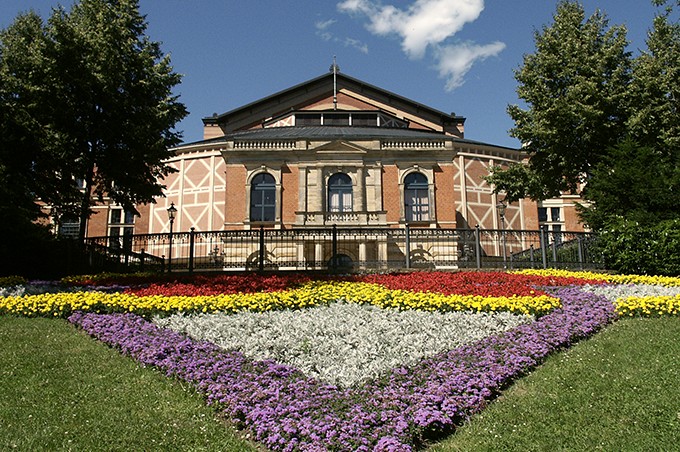
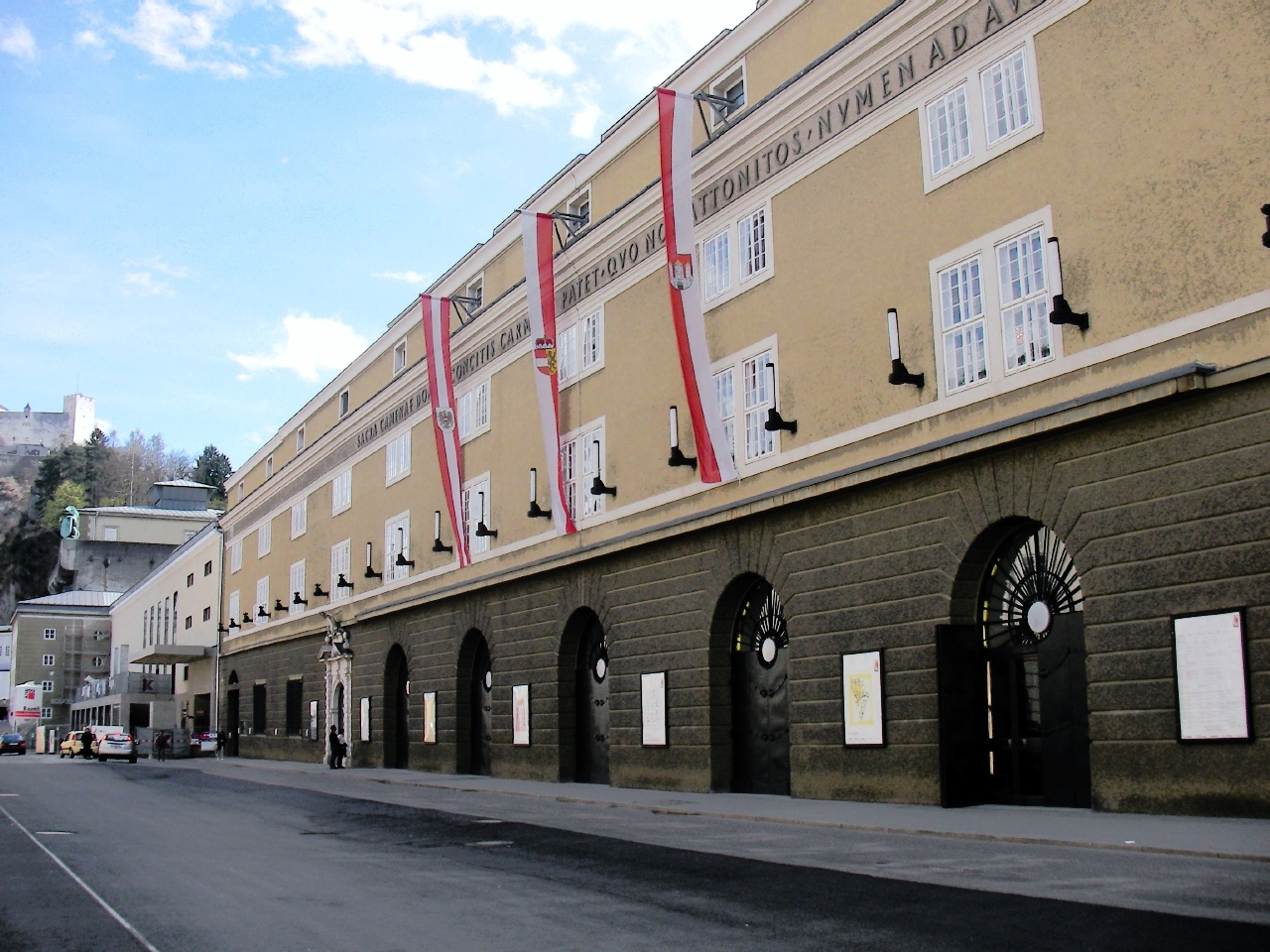
The recording featured here was made at the Jesus-Christus-Kirche in Berlin between October 1969 and January 1970, with the Berliner Philharmoniker, the Chor der Deutschen Oper Berlin, and a cast that included Helga Dernesch as Brünnhilde, Håkan Brilioth as Siegfried, Christa Ludwig as Waltraute and Karl Ridderbusch as Hagen. Released on Deutsche Grammophon in 1970, it formed part of Karajan’s complete studio recording of the Ring des Nibelungen, made between 1966 and 1970. The recording also provided the musical foundation for Karajan’s own Ring cycle at the Salzburg Easter Festival, where the work was staged between 1967 and 1970 as one of the defining projects of the festival’s early years.


For a playlist on the theme of Fate, it is a fitting conclusion. Beethoven confronts fate, Tchaikovsky struggles with it, and Verdi imagines its ultimate judgement. Wagner looks back after the outcome is already known. Fate is no longer a possibility or a threat. It has become reality.
— Pia Bernauer (Karajan Institute)