17 July 2026
Pia Bernauer
Spotlight: Salzburg Festival
For more than fifty years, Herbert von Karajan’s career was closely intertwined with the Salzburg Festival. While you are reading the full story, explore some of the recordings that accompanied this remarkable journey.
The Birth of the Salzburg Festival
Founded in 1920 in the aftermath of the First World War, the Salzburg Festival was conceived as far more than an annual series of performances. Its founders – Hugo von Hofmannsthal, Max Reinhardt, Richard Strauss, Franz Schalk and Alfred Roller – envisioned a festival that would help revive Europe’s cultural life through artistic excellence and international exchange. Rooted in Salzburg’s unique connection to Mozart and the city’s remarkable Baroque setting, the Festival was intended as a place where theatre, opera, and concerts could come together at the highest level.
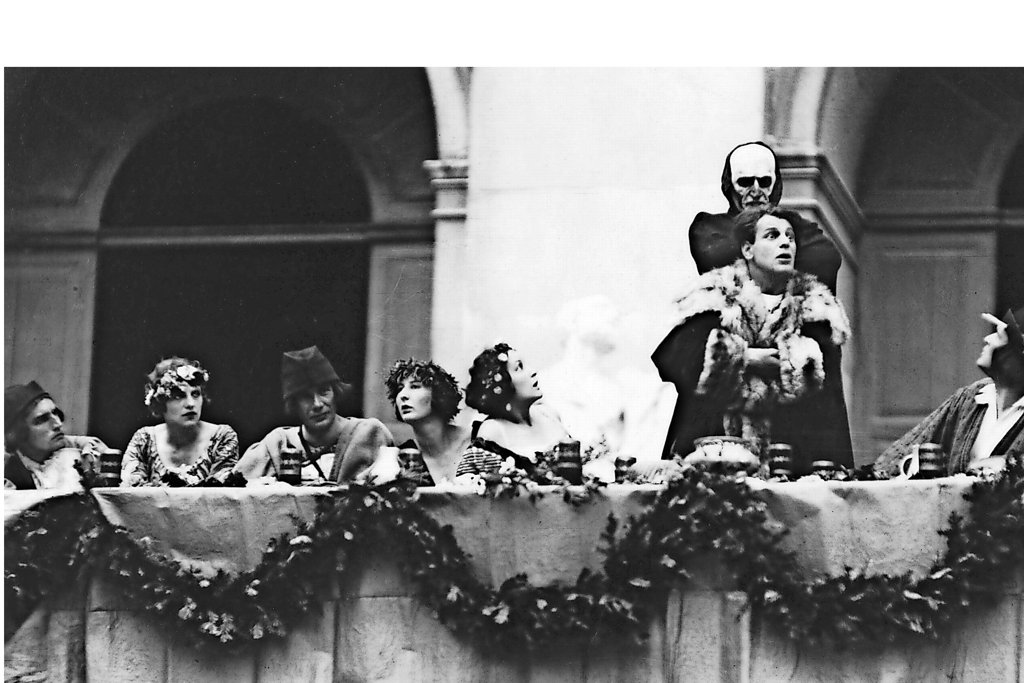
Directed by Max Reinhardt: Hugo von Hofmannsthal’s “Jedermann” at the first Salzburg Festival on August 22, 1920
The Festival opened on 22 August 1920 with Hugo von Hofmannsthal’s Jedermann, directed by Max Reinhardt on Cathedral Square. The choice of venue was born out of necessity. The original commission had not been completed, and the economic hardship following the war made it impossible to construct the planned stage in the Felsenreitschule. Reinhardt therefore obtained permission from Archbishop Ignatius Rieder to perform Jedermann in front of Salzburg Cathedral—establishing what would become one of the Festival’s defining traditions.
Concerts became part of the Festival in 1921, followed by opera in 1922, when productions by the Vienna State Opera were added to the programme. In the same year, the Vienna Philharmonic Orchestra began its enduring association with the Festival, laying the foundation for one of the longest and most important artistic partnerships in classical music.
It was into this rapidly evolving artistic environment that a young Herbert von Karajan first arrived in 1933.
Karajan’s First Encounters with the Salzburg Festival
Herbert von Karajan’s first official involvement with the Salzburg Festival came in 1933, when the twenty-five-year-old conductor was invited to direct the incidental music, specially composed by Bernhard Paumgartner, for Max Reinhardt’s celebrated production of Goethe’s Faust in the Felsenreitschule. For the young conductor, it was a unique opportunity to work alongside one of the most influential theatre directors of the twentieth century.
“I was able to watch his work all the time. I was a kind of maid of all works: conducting, coaching, taking chorus rehearsals.”¹
What impressed Karajan most was Reinhardt’s extraordinary instinct for casting:
“What impressed me enormously about him was his almost sleepwalker’s ability to cast the right people. He engaged an actor because he knew how far that person could grow under the right guidance … It was wonderful to see how they all grew together without really knowing how it happened.”²
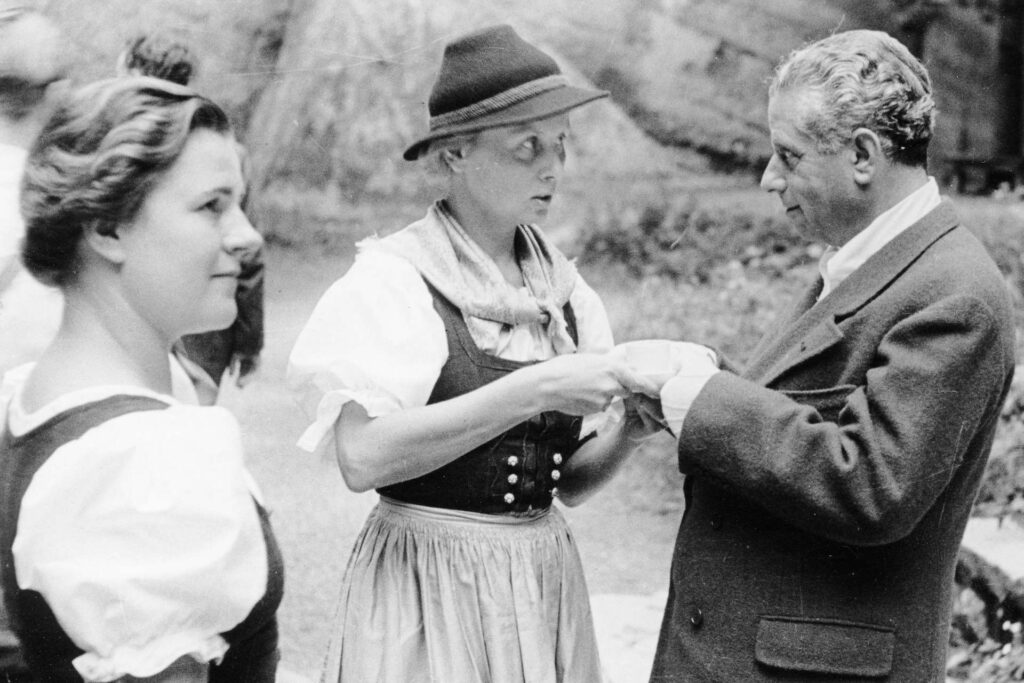
Max Reinhardt, Faust I (1935), © Foto Ellinger
Many of the principles Karajan admired in Reinhardt—careful preparation, trust in the individual artist and the ability to shape a production around each performer’s strengths—would later become defining characteristics of his own work in the opera house.
Back in Salzburg
Herbert von Karajan returned to the Salzburg Festival in 1948 under circumstances that marked both a personal and an artistic new beginning. His first post-war production, Gluck’s Orfeo ed Euridice, opened the Festival in the Felsenreitschule on 28 July 1948. More than simply marking Karajan’s official operatic debut at the Festival, the production established the former riding school as a permanent operatic venue, opening a new chapter in the Festival’s history.
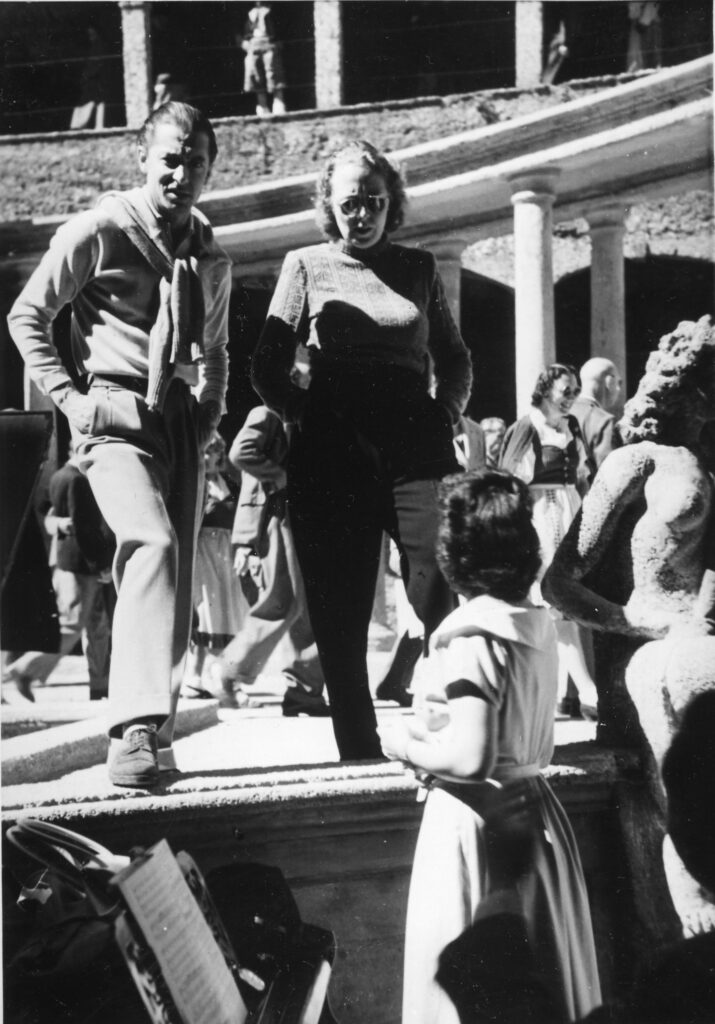
Karajan on stage with Maria Cebotari during rehearsals for “Orpheus and Eurydice” (1948)
The same summer, Karajan conducted Mozart’s Le nozze di Figaro (1948), an orchestral concert with the Vienna Philharmonic and Brahms’s Ein deutsches Requiem (1948). He returned the following year to conduct Verdi’s Messa da Requiem (1949) and Beethoven’s Symphony No. 9 (1949) before his rapidly expanding international career increasingly took him to Europe’s leading opera houses and concert halls.
By the mid-1950s, Karajan had assumed an exceptional position in European musical life. Following Wilhelm Furtwängler’s death in 1954, he became Artistic Director and chief conductor of the Berlin Philharmoniker in 1955. In 1956, he also took over as Director of the Vienna State Opera, while continuing his close artistic relationship with La Scala in Milan.
The Salzburg Festival had already decided in late 1954 that Karajan should succeed Furtwängler in a leading artistic role. Following extensive discussions about the Festival’s future, a contract was signed on 17 March 1956, appointing him Artistic Director of the Salzburg Festival for the seasons 1957–1959. One of Karajan’s conditions was that he should be responsible for opera productions not only as conductor but also as stage director.
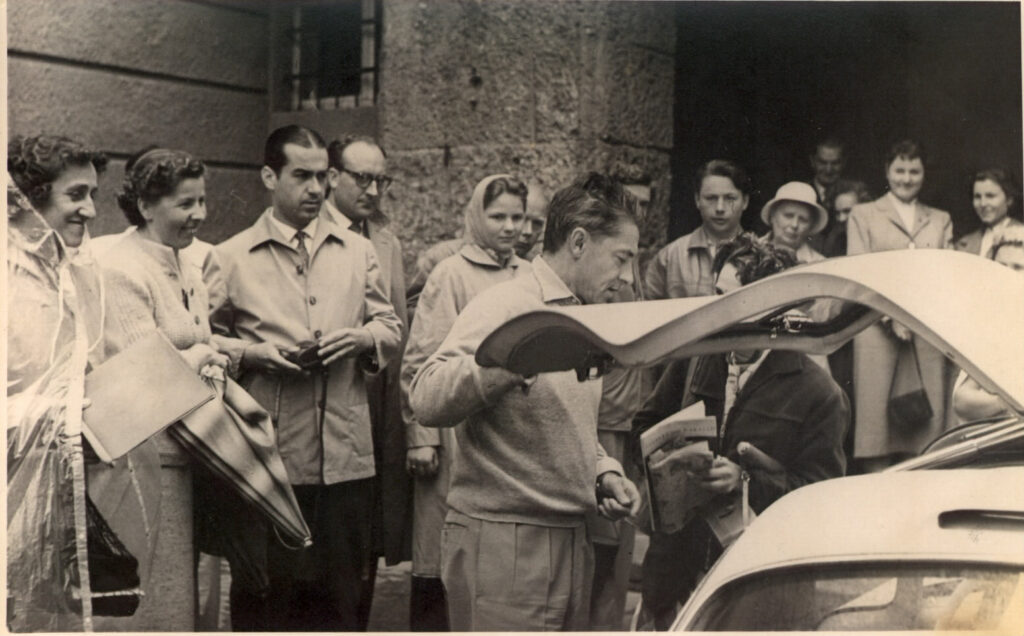
Karajan at the back of Salzburg Festspielhaus, 1957; ©Nachlaß: E. Krafft; Karajan-Archive
When he returned to the Festival in 1957, Beethoven’s Fidelio became the first Salzburg production in which he fulfilled this dual role. It marked the beginning of a new phase in the Festival’s artistic development. Further productions followed in quick succession, including Verdi’s Falstaff (1957), Verdi’s Don Carlos (1958) and Gluck’s Orfeo ed Euridice (1959). In the same season, Karajan conducted the Festival’s newly established concert series devoted to contemporary music, presenting works by Theodor Berger, Gottfried von Einem and Arthur Honegger with the Berlin Philharmonic. From then on, he appeared regularly in both the Festival’s opera and concert programmes, conducting the Vienna Philharmonic as well as the Berlin Philharmonic.
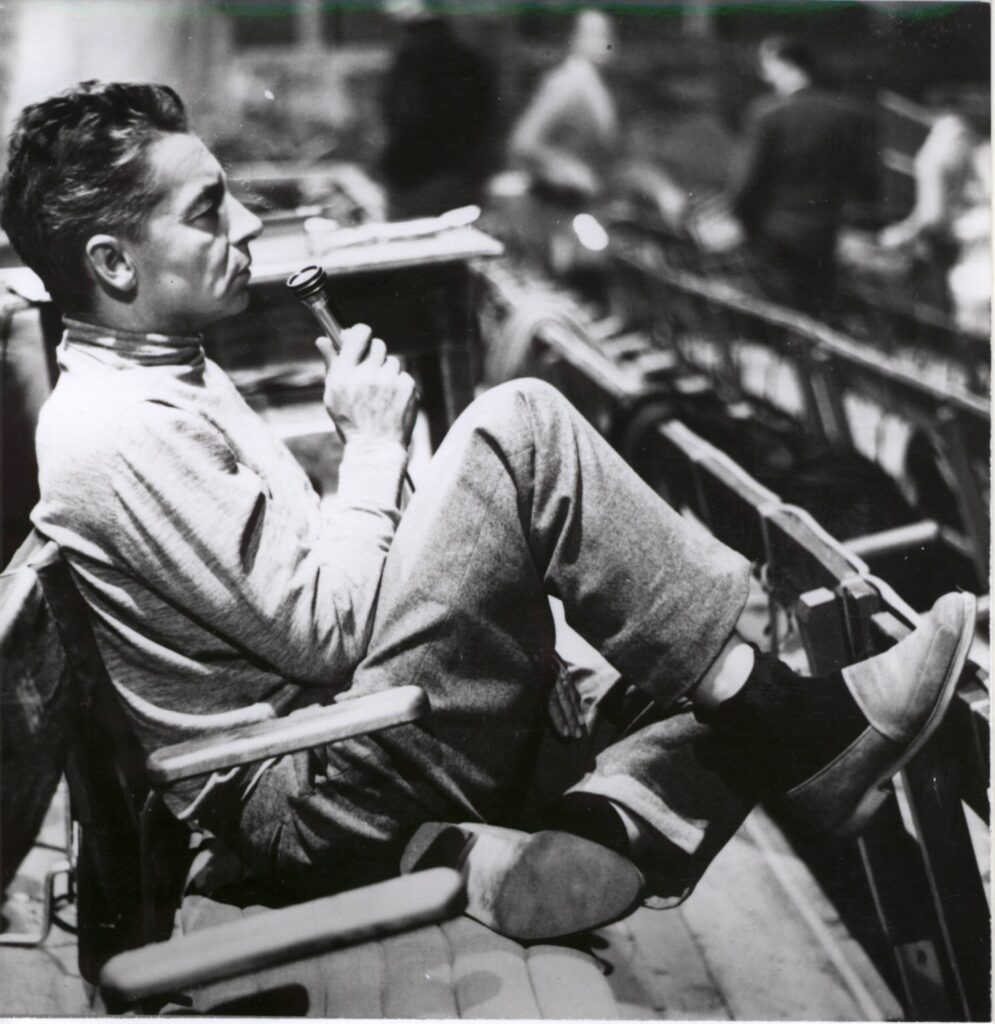
Directing rehearsals for L. v. Beethoven’s “Fidelio” at the Felsenreitschule (1958) ©SF/Ellinger; Karajan Archives
By the end of the decade, however, it had become increasingly clear that the Festival’s artistic ambitions had outgrown its existing theatres. The long-planned construction of a new festival theatre promised entirely new possibilities for opera—and Herbert von Karajan would play a decisive role in shaping its future.
A New Stage for Opera
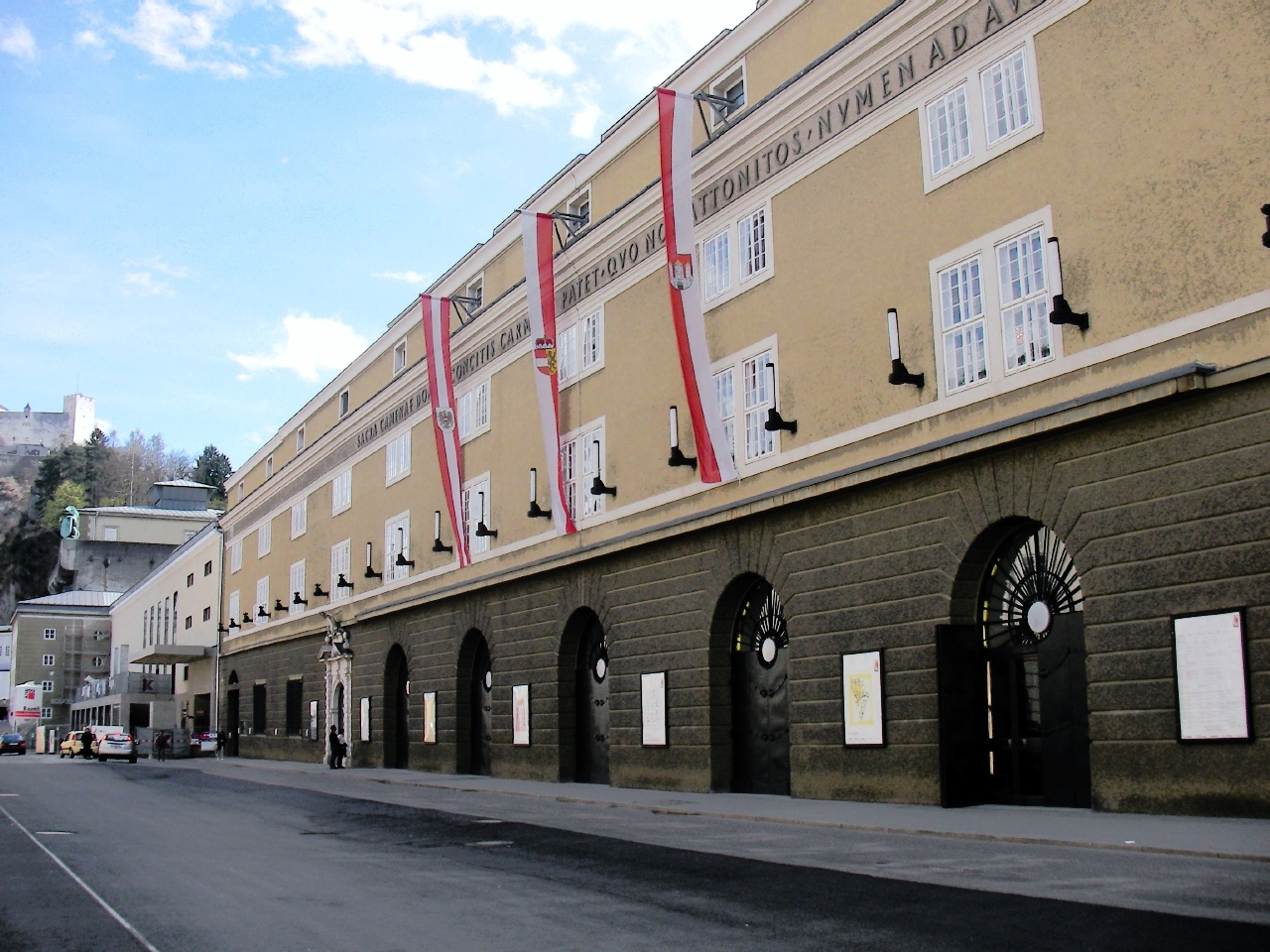
The opening of the Grosses Festspielhaus on 26 July 1960 marked a turning point in the history of the Salzburg Festival. For decades, the Festival had outgrown its existing theatres. The new building, designed by architect Clemens Holzmeister, was conceived as a flexible performance space capable of accommodating the Festival’s increasingly ambitious artistic programme. Its vast stage, extensive backstage facilities, and modern technical equipment opened entirely new possibilities for opera production, allowing directors and designers to realise ideas that had previously been impossible in Salzburg.³
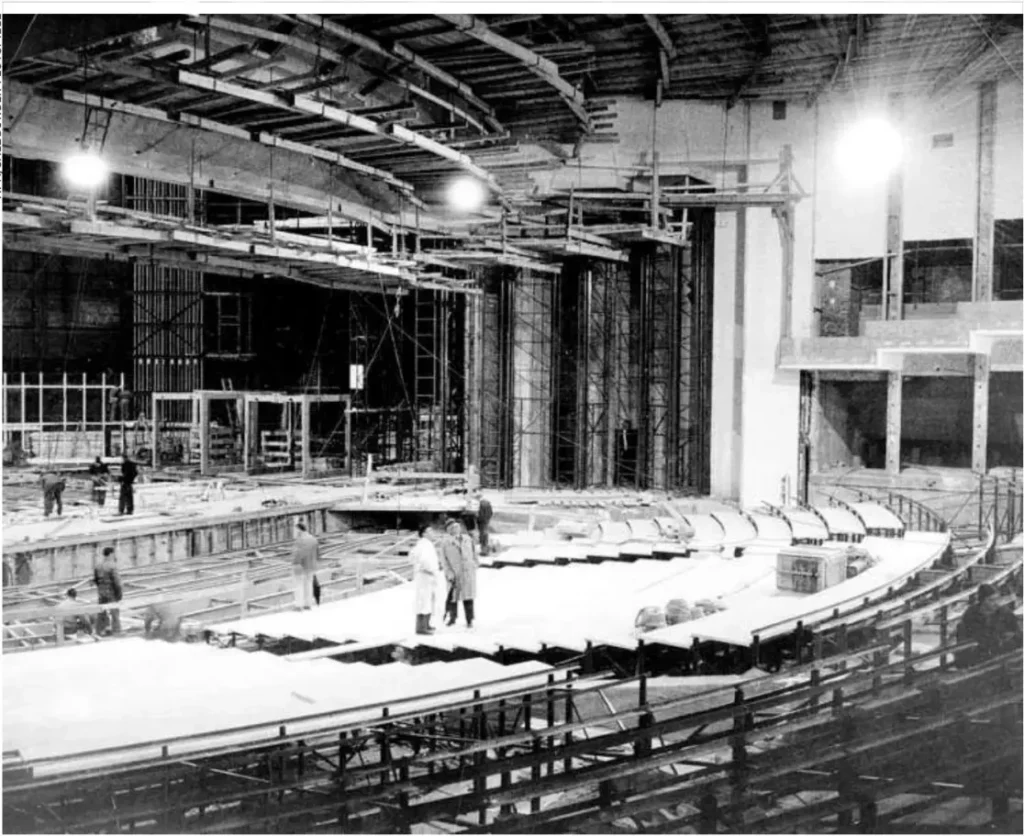
As Artistic Director of the Salzburg Festival, Herbert von Karajan was among the strongest advocates of the project. Although the theatre was the result of a collaborative effort involving architects, politicians, and Festival officials, Karajan served as an important artistic adviser throughout its final planning and construction. Drawing on his experience at Europe’s leading opera houses, he contributed practical ideas on the theatre’s technical facilities and stage design, convinced that a modern opera house should serve both musical and dramatic expression.³
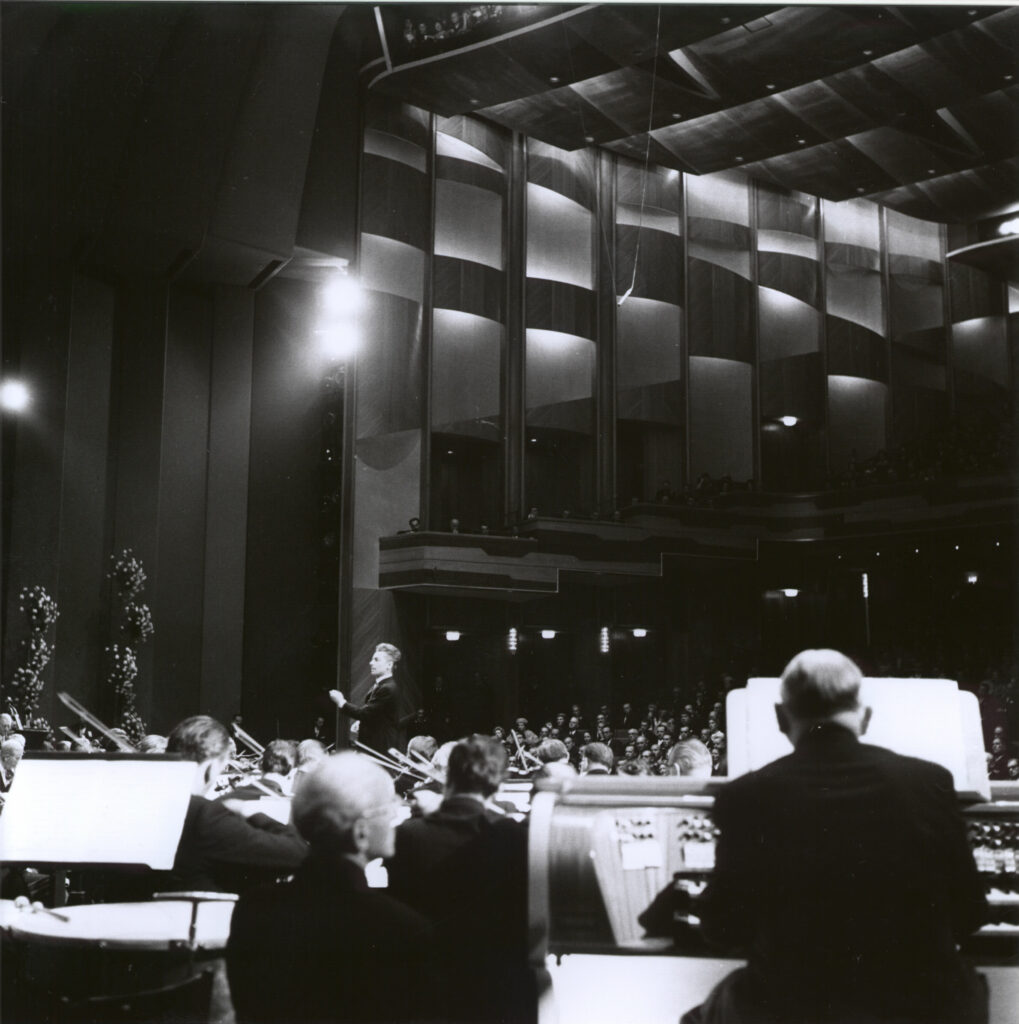
Karajan conducts the Vienna Philharmonic at the opening of the new Festspielhaus (1960); ©Elfriede Hanak;Karajan-Archive
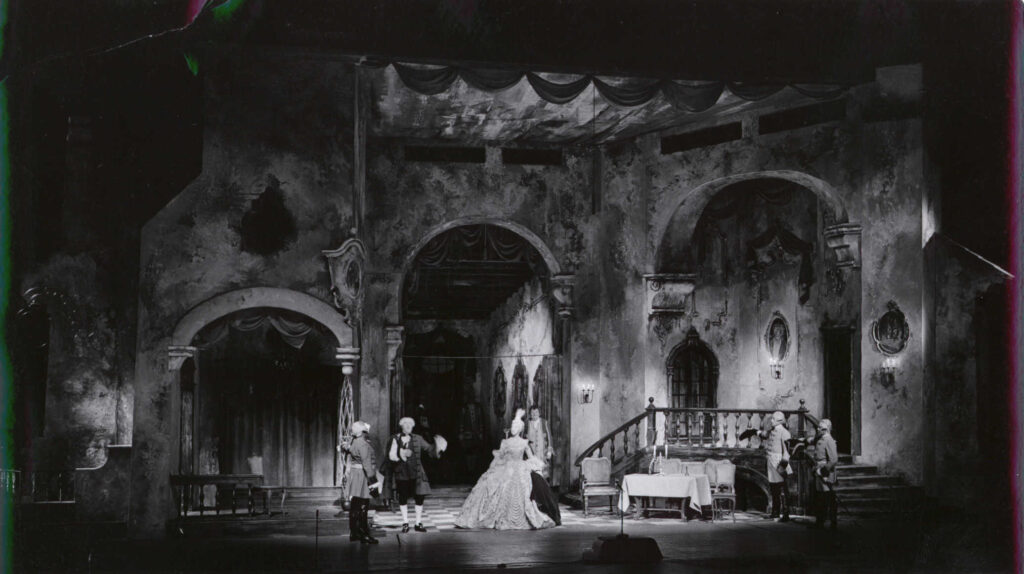
Der Rosenkavalier: Scene Photo (1960) ©Karajan-Archive
The new theatre was inaugurated with Richard Strauss’s Der Rosenkavalier (1960), conducted by Karajan, opening a remarkable new chapter in the Festival’s history. Although he resigned from the Festival’s Board of Directors only a month later, his artistic influence remained profound. As both conductor and stage director, he transformed the Grosses Festspielhaus into the principal stage for his Salzburg productions. These included Verdi’s Il trovatore (1962), Richard Strauss’s Elektra (1964), Mussorgsky’s Boris Godunov (1965), Bizet’s Carmen (1966), Mozart’s Don Giovanni (1968), Verdi’s Don Carlo (1975), and Verdi’s Aida (1979). Among them, Don Carlo proved especially enduring. Premiered in 1975, the production returned to the Salzburg Festival in 1976, 1977, and 1978, before being revived for the Easter Festival in 1979 and again in 1986. Reviewing the 1979 revival, critic Imre Fabian described it as “music theatre born entirely from the spirit of music”—a phrase that perhaps captures Karajan’s operatic ideal better than any other.⁴ Working closely with stage designer Günther Schneider-Siemssen, Karajan developed a distinctive visual language in which architecture, light and music formed an inseparable whole. The Grosses Festspielhaus became the artistic home of his Salzburg productions and one of the defining opera stages of the twentieth century.
Final Years and Legacy
In the final years of his life, Herbert von Karajan continued to shape the artistic profile of the Salzburg Festival with a series of memorable productions and concerts. Among the highlights were new productions of Richard Strauss’s Der Rosenkavalier (1983) and Bizet’s Carmen (1985), both featuring Agnes Baltsa in leading roles. Sacred music also remained an important part of his final Salzburg seasons, culminating in performances of Verdi’s Messa da Requiem (1984) and Brahms’s Ein deutsches Requiem (1988). One of the defining musical moments of his final Salzburg seasons came on 15 August 1987, when Jessye Norman performed Wagner’s Isoldes Liebestod with Karajan and the Vienna Philharmonic in the Grosses Festspielhaus.
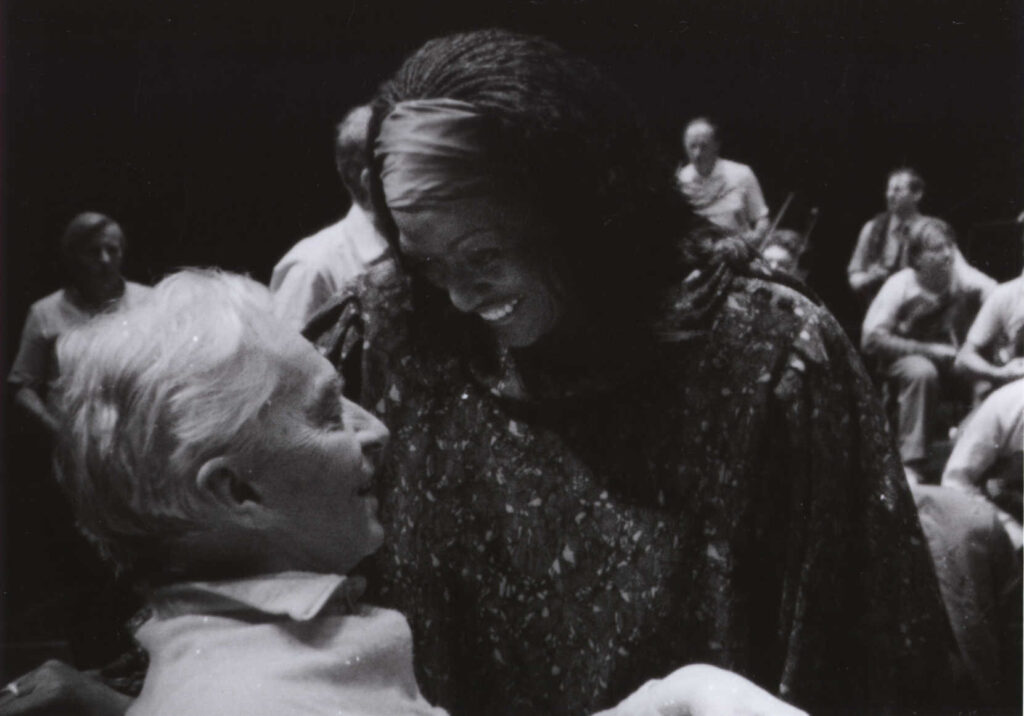
Karajan in Conversation with Jessye Norman (from the film “Karajan in Salzburg”, 1988) ©Susan Froemke/Peter Gelb; Karajan-Archive
In the summer of 1989, Karajan was preparing Verdi’s Un ballo in maschera for the Salzburg Festival. Rehearsals had already begun when he died unexpectedly on 16 July 1989 at his home in Anif, just outside Salzburg. His death ended more than five decades of artistic association with the Festival.
The Salzburg Festival honoured his memory almost immediately. On 23 July 1989, Riccardo Muti conducted Mozart’s Requiem in Salzburg Cathedral in memory of Karajan. A week later, on 30 July, Seiji Ozawa, Sir Georg Solti and James Levine shared the podium in a memorial ceremony in the Grosses Festspielhaus, conducting Mozart’s Maurerische Trauermusik. Ten years later, on 16 July 1999, the Festival commemorated the anniversary of Karajan’s death with another performance of Mozart’s Requiem in Salzburg Cathedral under Claudio Abbado. Released as a live recording, the performance has since become one of the most celebrated interpretations of Mozart’s final masterpiece.
From his first appearance as a twenty-five-year-old conductor in Max Reinhardt’s Faust to his final Festival rehearsals in the summer of 1989, Herbert von Karajan’s artistic life remained inseparably connected with the Salzburg Festival. Few musicians have shaped its history so profoundly—or left a legacy that continues to resonate on its stages today.
— Pia Bernauer (Karajan Institute, Salzburg)
1 Richard Osborne, Conversations with Karajan, Oxford University Press, Oxford, 1989, p. 11.
2 Richard Osborne, Herbert von Karajan. Leben und Musik, Deutscher Taschenbuch Verlag, Munich, 2008, p. 95.
3 Das Neue Salzburger Festspielhaus. Festschrift zur Eröffnung des Großen Festspielhauses, Salzburg Festival, Salzburg, 1960, pp. 41–48; Richard Osborne, Herbert von Karajan. Leben und Musik, Deutscher Taschenbuch Verlag, Munich, 2008, pp. 512–513.
4 Imre Fabian, “Aus dem Geist der Musik”, Der Tagesspiegel, 14 April 1979