16 June 2026
Pia Bernauer
Weekly SpinOn: Love
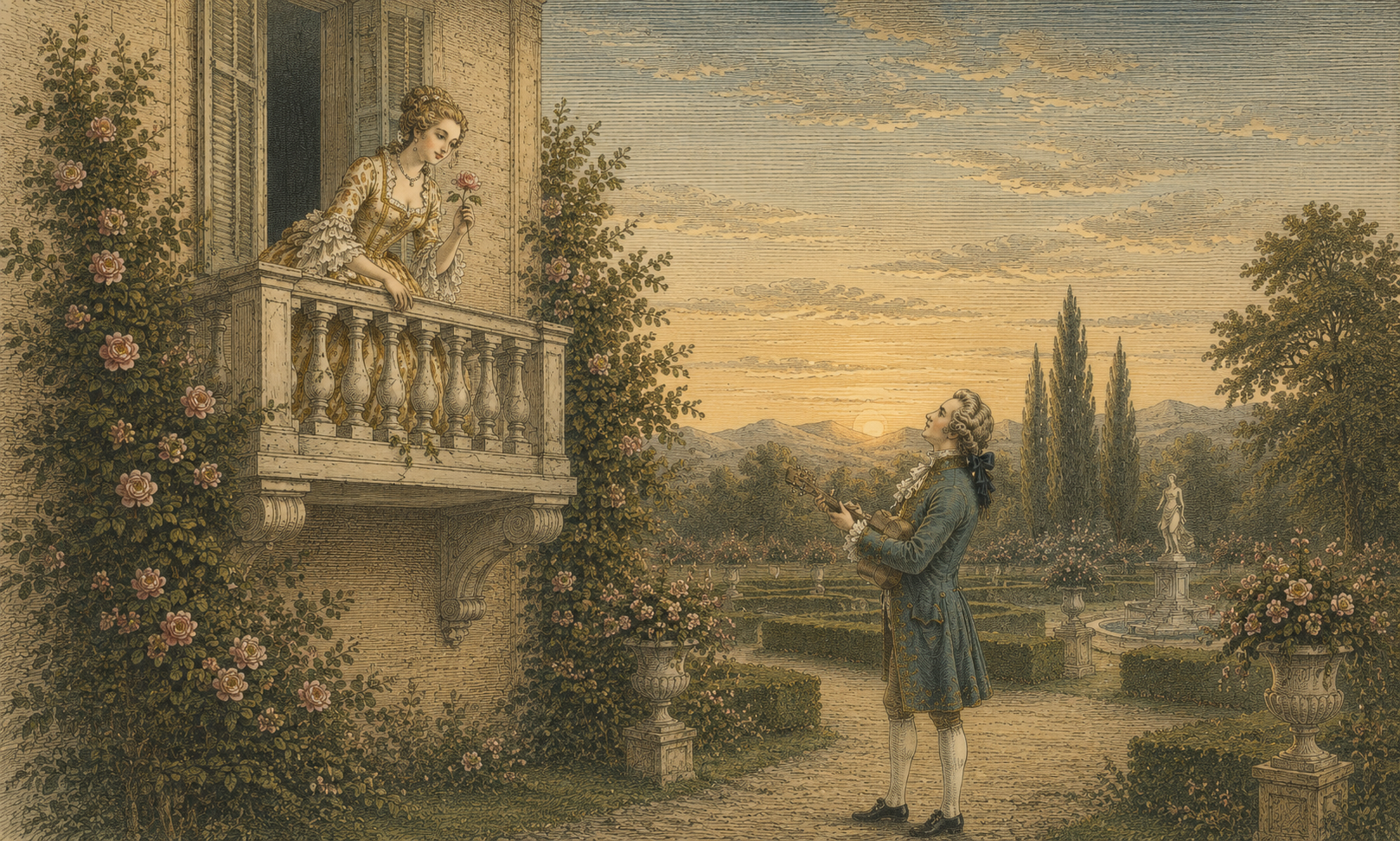
Track 1: Le nozze di Figaro, K. 492, Act II: No. 12, “Voi che sapete” – Mozart
As we begin our journey into the theme of love in classical music, where better to start than at the very beginning? With first love.
Few composers capture this magic as perfectly as Mozart does in Cherubino’s aria “Voi che sapete” from Le nozze di Figaro. The young boy is not singing to a specific person. Instead, he is trying to make sense of an overwhelming emotion that has suddenly taken over his life.
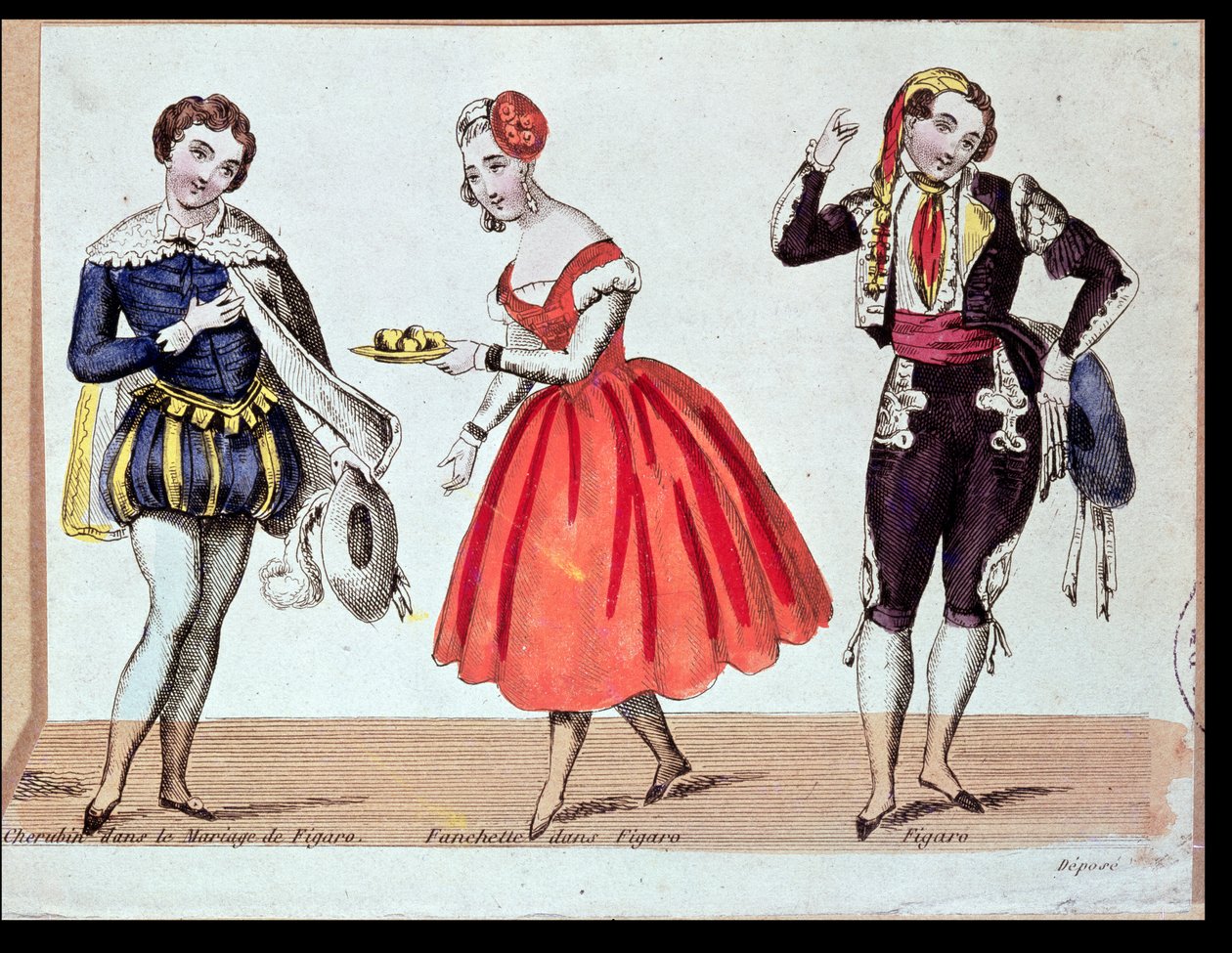
Cherubino, Fanchette and Figaro, scene from ‘The Marriage of Figaro’ by Pierre Augustin Caron de Beaumarchais,1784
In the story, Cherubino is constantly falling in love. Looking for answers, he turns to the women around him: “You who know what love is, tell me if I have it in my heart.” He describes love as a beautiful confusion of opposites. He feels joy and pain, freezing one moment and burning the next. The music perfectly mirrors this mood. A graceful melody floats over a restless orchestra, sounding just like a young heart beating fast.
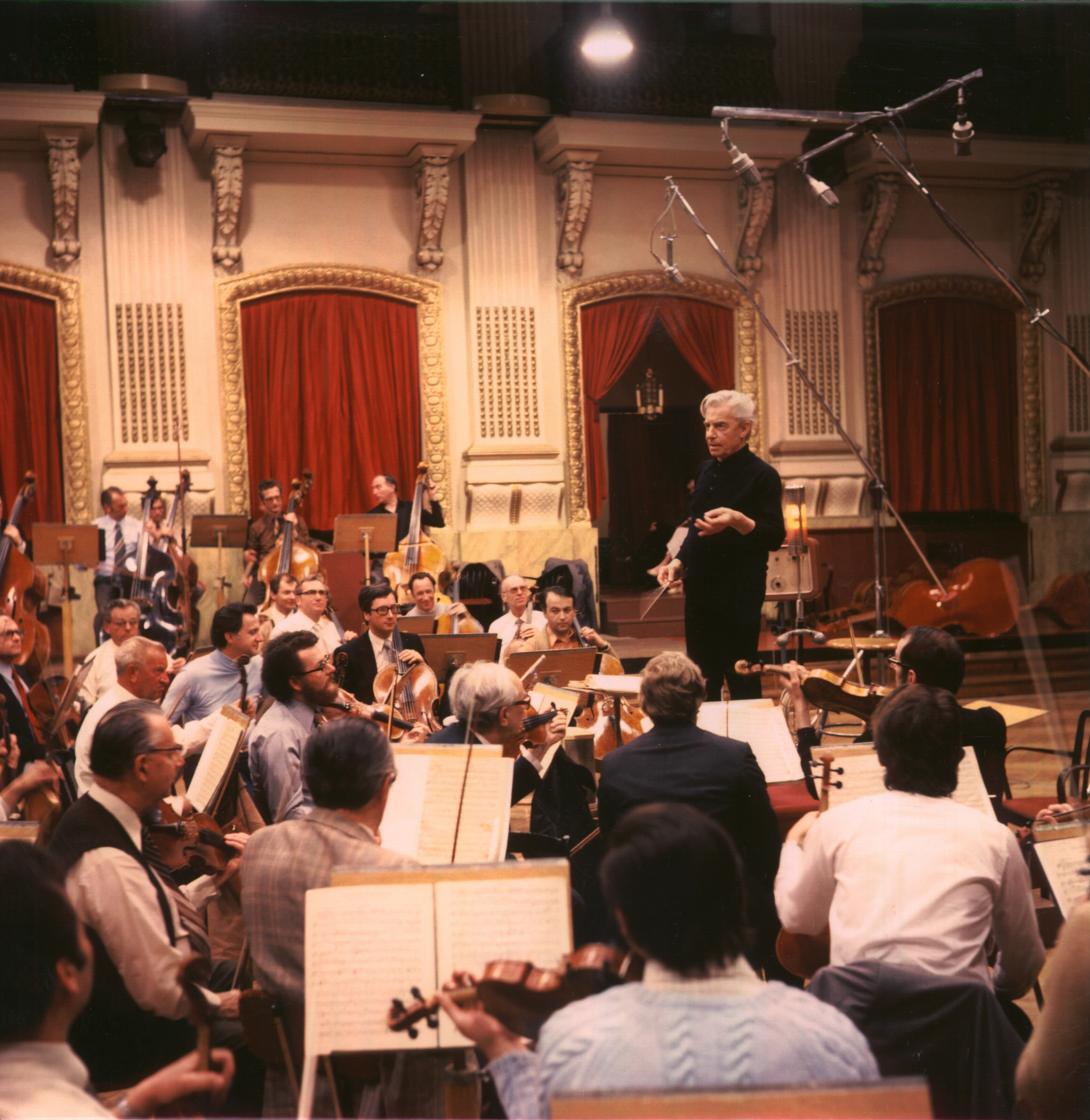
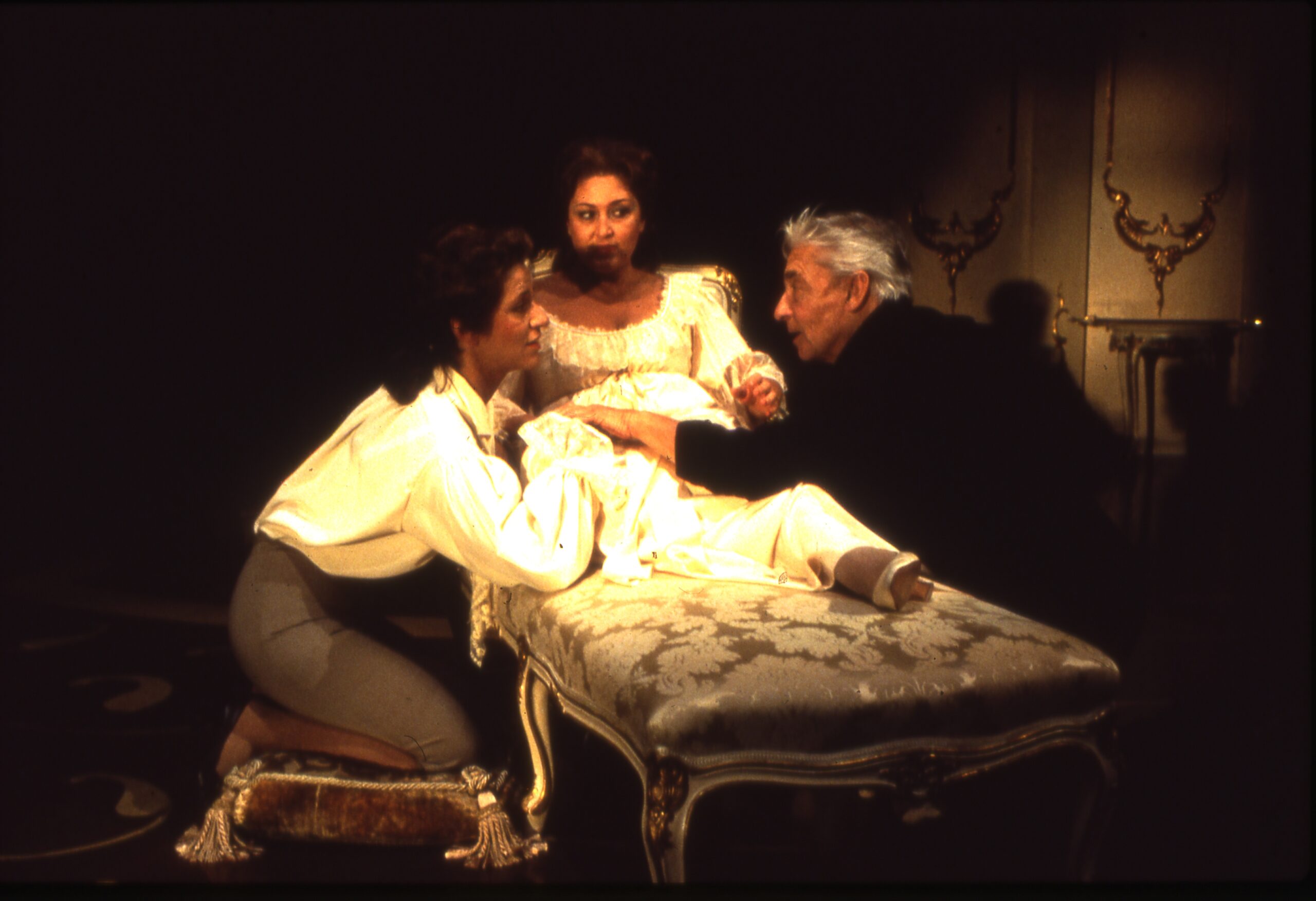
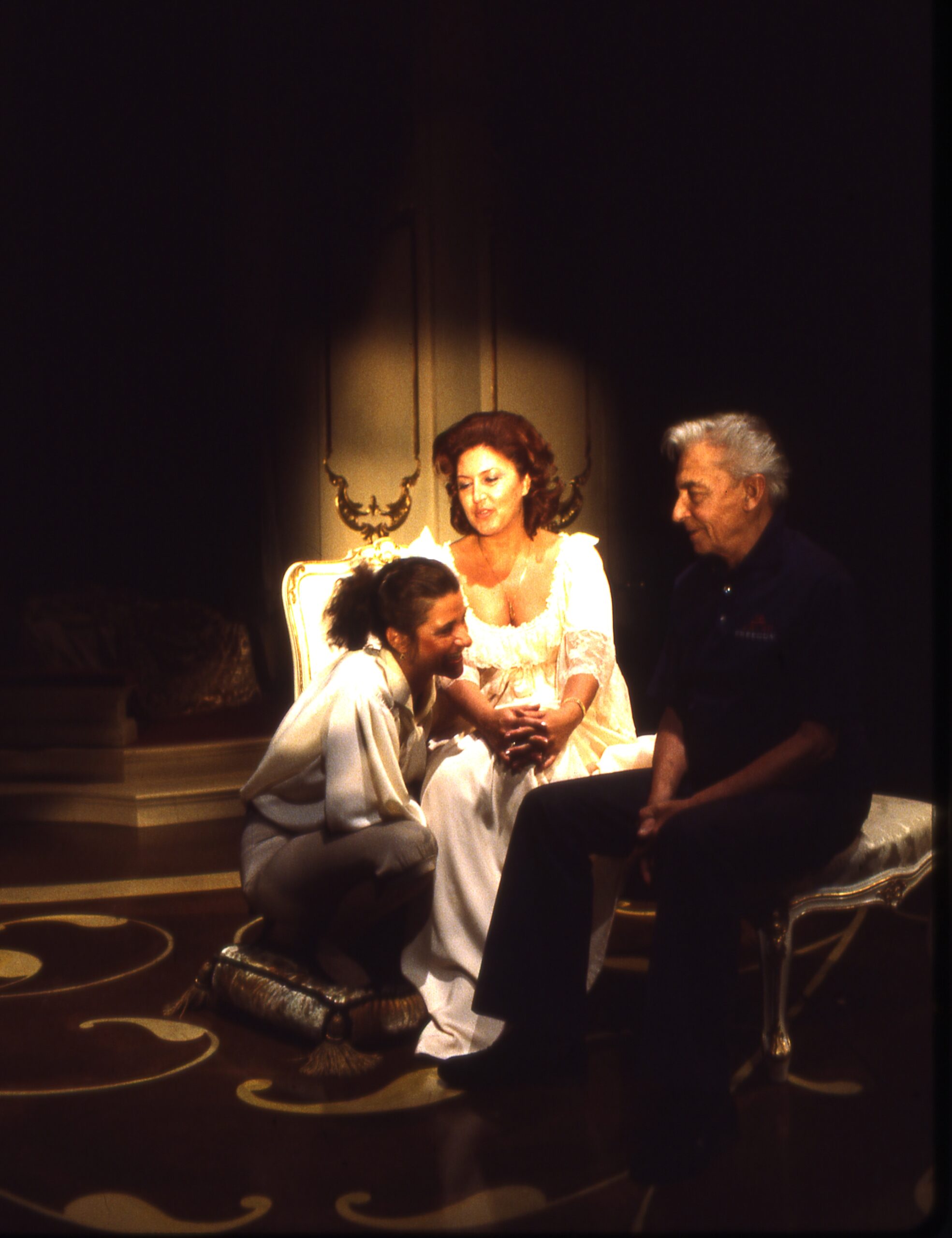
Rehearsing Mozart’s Le nozze di Figaro with the Vienna State Opera Orchestra at the Sofiensäle, Vienna, 1978. © Elfriede Hanak / Karajan Archive.
This restless energy is wonderfully captured in our featured recording, made in Vienna in April 1978 and released by DECCA. Conducting the Wiener Philharmoniker and the Wiener Staatsopernchor, Herbert von Karajan brings together a true dream cast of the era. Frederica von Stade gives Cherubino a warm, youthful voice. She stars alongside famous singers like José van Dam as Figaro, Ileana Cotrubas as Susanna, Anna Tomowa-Sintow as the Countess, and Tom Krause as the Count.
As the opening track of our playlist, “Voi che sapete” gently opens the door to the wide world of romance before we explore deeper emotions in the later tracks.
Track 2: Der Rosenkavalier, Op. 59, Act II: “Mir ist die Ehre widerfahren” (Presentation of the Rose) – Richard Strauss
While Track 1 captures the innocent confusion of early romance, the “Presentation of the Rose” from Richard Strauss’s “Der Rosenkavalier” marks the musical epitome of love at first sight. Der Rosenkavalier is set in eighteenth-century Vienna. In Act II, the young Count Octavian is sent to deliver a silver rose to Sophie on behalf of Baron Ochs. On paper, this ritual is a strict aristocratic formality. Yet the moment Octavian presents the rose and the two lock eyes, the polite protocol dissolves. Love hits like a strike of lightning, and time itself seems to stop—a sensation Sophie explicitly marvels at moments later.
One of the most remarkable aspects of the scene is Strauss’s orchestration. The presentation of the silver rose is coloured by celesta, harps, and divided high strings, producing the floating, weightless sonority for which the scene is famous. For experts, Karajan’s evolving sonic approach to this specific scene is of central interest.
The recording presented here, made in November 1982 in the Großer Saal of the Wiener Musikverein, is Herbert von Karajan’s second complete studio recording of the opera. It followed his legendary first account from December 1956, produced for EMI with the Philharmonia Orchestra at London’s Kingsway Hall—a historic milestone featuring Elisabeth Schwarzkopf, Christa Ludwig, and Teresa Stich-Randall. While the 1956 version remains a benchmark, Deutsche Grammophon’s early digital technology in 1982 strongly supported Karajan’s late aesthetic ideal: a seamless, transparent orchestral sound that truly comes to life against a completely silent background, free from the mechanical hiss of traditional audio tapes. The critical reception of Karajan’s late Strauss interpretations consistently highlights how he condensed these ethereal textures into absolute transparency and orchestral weightlessness. Furthermore, with the Wiener Philharmoniker, he had at his disposal the most historically authentic ensemble for the specific Viennese tonal culture required for this repertoire.
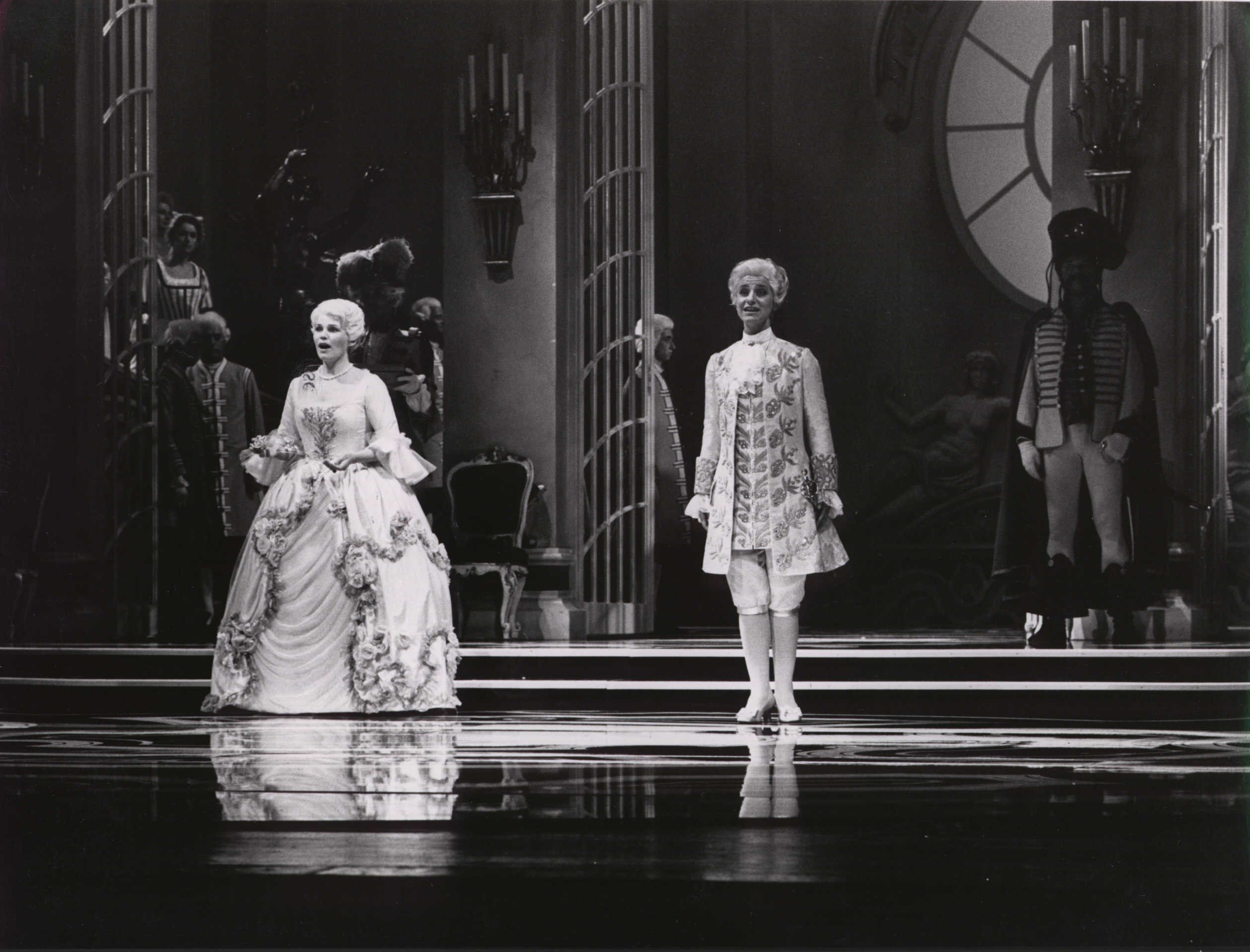
Janet Perry as Sophie and Agnes Baltsa as Octavian, 1984 ©Salzburger Festspiele/Weber
The vocal core of the 1982 scene is formed by Agnes Baltsa as Octavian and Janet Perry as Sophie. Following the recording’s release in 1984, the musical press specifically noted how precisely Karajan integrated and rhythmically controlled these two highly contrasting vocal colors within the finely chiseled orchestral web.
Track 3: Symphonie fantastique, Op. 14 – II. Un bal – Hector Berlioz
If “Der Rosenkavalier” captures the moment when two people unexpectedly fall in love, Hector Berlioz’s “Symphonie fantastique” shows what can happen when love becomes an obsession.
The work was inspired by one of the most famous love stories in music history. In 1827, Berlioz attended a performance of Shakespeare’s “Hamlet” in Paris and became fascinated by the Irish actress Harriet Smithson, who played Ophelia. Although the two had never met, Berlioz fell passionately in love. He wrote letters, sent messages, and followed her career from a distance. The intensity of these feelings eventually found its way into music.
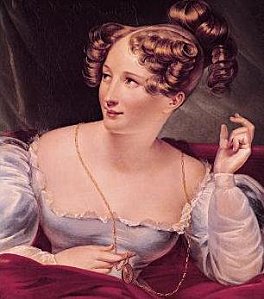
Harriet Smithson (1832)
Completed in 1830, “Symphonie fantastique” tells the story of a young artist consumed by an unattainable love. Berlioz even supplied the audience with a detailed programme describing the hero’s emotional journey. Throughout the work, the beloved woman appears as a recurring musical idea, the famous idée fixe.
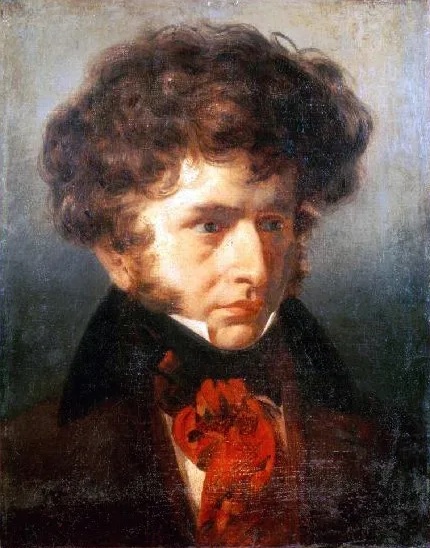
Hector Berlioz (1832, Émile Signol)
The second movement, “Un bal” (“A Ball”), transports us to a glittering Parisian dance hall. Waltzes swirl through the orchestra, harps shimmer in the background, and for a moment, everything appears elegant and carefree. Yet beneath the surface, the artist remains preoccupied with the woman he loves. Even amid the excitement of the ballroom, the idée fixe suddenly appears, reminding him that he cannot escape his feelings.
The recording featured here was made with the Berliner Philharmoniker under Herbert von Karajan. Few conductors were better equipped to reveal the extraordinary orchestral imagination of Berlioz. Rather than treating the movement simply as a brilliant showpiece, Karajan emphasizes its atmosphere of enchantment and illusion. The result is a performance in which elegance and longing exist side by side.
For a playlist on the theme of love, “Un bal” shows a very different kind of romantic experience. The music places us in the middle of a glittering ballroom, yet the protagonist’s attention is fixed on a single person. Berlioz contrasts the public world of dancing and celebration with an intensely private emotional reality, creating one of the most original musical portraits of love in the nineteenth century.
Track 4: Romeo and Juliet, Fantasy Overture – Pyotr Ilyich Tchaikovsky
As the final track in this week’s playlist, Tchaikovsky’s Romeo and Juliet brings us to the most famous love story in Western culture. Shakespeare’s tragedy of two young lovers, divided by the hostility between their families, has inspired composers for centuries. Among the many musical responses to the play, Tchaikovsky’s Fantasy Overture is perhaps the most celebrated orchestral interpretation.
Composed between 1869 and 1880, the work is subtitled “Fantasy Overture”. Rather than telling Shakespeare’s story scene by scene, Tchaikovsky transforms its central characters and conflicts into purely orchestral music. The result is a symphonic drama in which love, violence, hope, and loss unfold without words. The famous love theme, first introduced quietly by the English horn and violas before expanding into the strings, has become one of the composer’s most recognizable melodies. Yet from the outset, tenderness is shadowed by conflict. Love and violence remain inseparable throughout the score.
The recording featured here was made in Vienna with the Wiener Philharmoniker between 28 and 31 October 1946 and released the following year by EMI. It was among the first recordings Karajan made after the Second World War. Modern listeners will immediately notice the limitations of the sound. Recorded only a year after the end of the war, it belongs to a very different period in the history of recording. Yet these historical circumstances should not distract from the performance itself. Heard today, the recording provides a valuable document of Karajan’s early post-war work with the Wiener Philharmoniker.
For a playlist on the theme of love, Romeo and Juliet adds a perspective largely absent from the previous tracks. Here, love is not discovered, celebrated, or imagined. It is placed in direct conflict with the world around it. The tension between the famous love theme and the music associated with the feud between the two families forms the dramatic core of the work.
— Pia Bernauer (Karajan Institute)