26 June 2026
Pia Bernauer
Weekly SpinOn: The Unfinished

Track 1: Symphony No. 8 in B minor, D. 759 “Unfinished” – II. Andante con moto – Franz Schubert
For a playlist dedicated to The Unfinished, there could hardly be a more fitting opening than Franz Schubert’s Symphony No. 8 in B minor, later nicknamed the “Unfinished”. Had it been Schubert’s final composition, its incompleteness might seem less remarkable. Instead, he lived for another six years, composing many of his greatest works, yet never returned to finish it. Why remains one of the great mysteries of music history.
Only two movements of the symphony were completed. However, Schubert clearly intended to continue the work: substantial sketches for a third movement survive, showing that he did not conceive it as a two-movement symphony. Whether he also began a finale, abandoned the work deliberately, or simply laid it aside for reasons now lost to history remains unknown.
Unlike the other unfinished works featured in this playlist, however, Schubert’s symphony has never acquired a generally accepted completion. Although several musicians and scholars have attempted to reconstruct the missing movements, it continues to be performed almost exclusively in its original two-movement form.
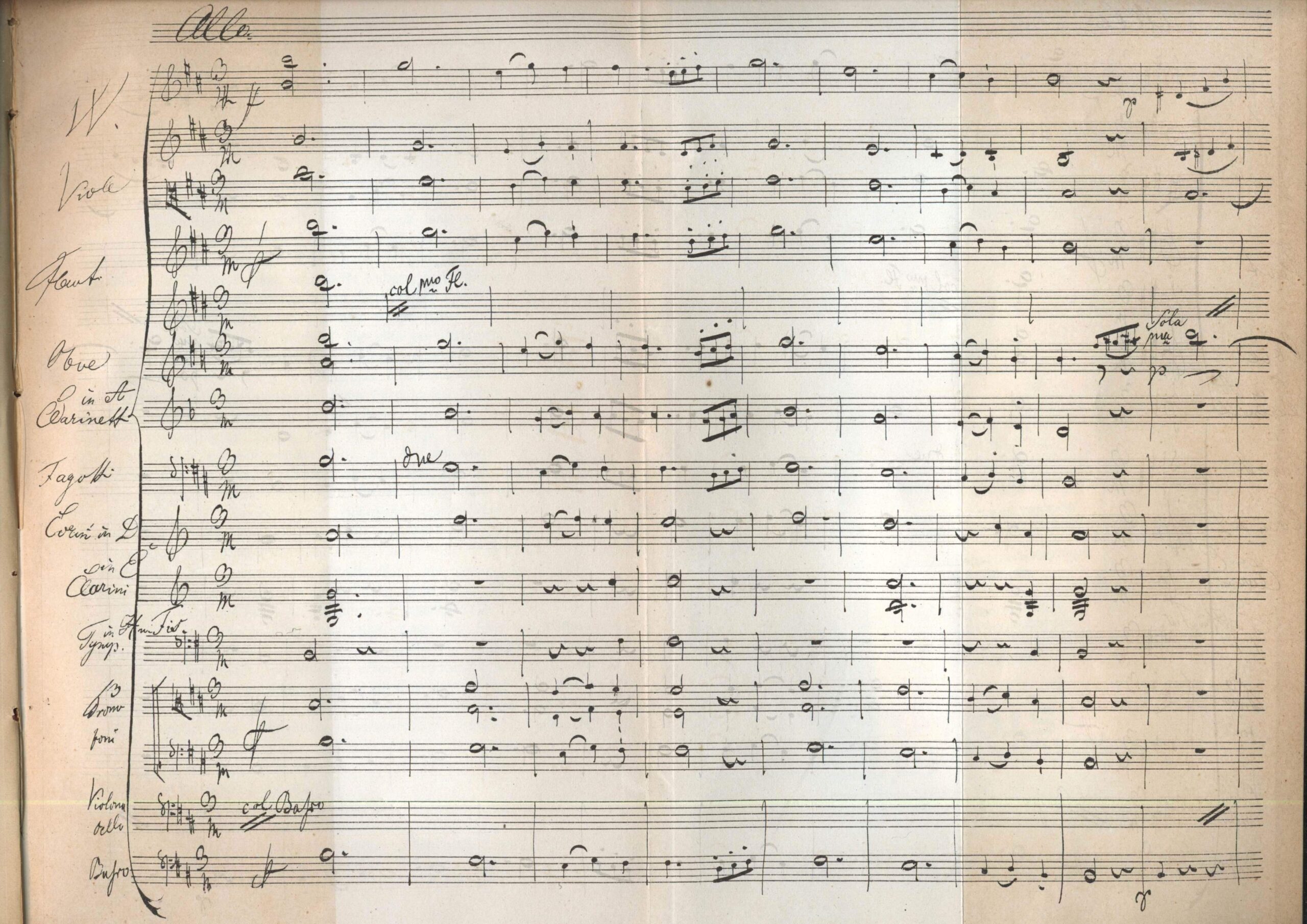
Facsimile of the unfinished Scherzo, third movement
The recording featured here was made in Berlin with the Berliner Philharmoniker between 4 and 8 January 1975 and released by EMI the following year. By then, Herbert von Karajan had already recorded Schubert’s Unfinished Symphony several times, making this one of the mature interpretations of a work that accompanied him throughout his career.
Unlike the remaining works in this playlist, Schubert’s Unfinished Symphony has never been completed in a form that entered the standard repertoire. The works that follow tell three very different stories of how music history has dealt with the unfinished.
Track 2: Requiem in D minor, K. 626 – I. Introitus: Requiem aeternam – Wolfgang Amadeus Mozart
Schubert’s Unfinished Symphony remained exactly that: unfinished. Mozart’s Requiem, however, has a very different story. When Mozart died on 5 December 1791 at the age of just 35, the work was still incomplete. Rather than leaving it unfinished, his widow Constanze arranged for it to be completed so that the commission could be delivered and the remaining fee paid.
The monumental task eventually fell to Mozart’s pupil Franz Xaver Süßmayr, who completed the score using Mozart’s surviving manuscript, sketches, and verbal instructions. Although scholars continue to debate how much of the completed Requiem reflects Mozart’s own intentions, Süßmayr’s version became the standard and remains the one performed around the world today.
The Introitus, chosen for this playlist, is the only movement of the Requiem that survives in a fully orchestrated autograph by Mozart. Every note of this opening movement was written by Mozart, making it the closest we can come to hearing the work exactly as he conceived it.
The recording featured here was made with the Berliner Philharmoniker and the Singverein der Gesellschaft derMusikfreunde in Wien at the Jesus-Christus-Kirche in Berlin between 5 and 12 October 1961 and released by Deutsche Grammophon in 1962. The distinguished solo quartet features Wilma Lipp, Hilde Rössel-Majdan, Anton Dermota and Walter Berry.
When Karajan recorded the Requiem, historically informed performances with smaller ensembles were beginning to gain attention. He remained unconvinced. “We know how thrilled Mozart was when he had more and better string players to realize his music,” he later remarked, arguing that this applied especially to the late symphonies and the Requiem. Confident that history would settle the debate, he added:
“Posterity can judge what is good music-making and what are merely the trends of a particular time.”¹
Unlike Mozart’s Requiem, whose completion by Süßmayr became the accepted performing version, our next work has never acquired a single universally accepted ending. More than a century after Anton Bruckner’s death, musicians still disagree on how his unfinished Ninth Symphony should end.
Track 3: Symphony No. 9 in D minor – III. Adagio – Anton Bruckner
Few composers revised their own music as relentlessly as Anton Bruckner. Throughout his life, he repeatedly returned to his symphonies, sometimes years after their completion. As a result, several of his finished works exist in multiple authorised versions.
Perhaps that is why the fate of his Ninth Symphony seems so fitting. Bruckner was still working on its finale when he died in 1896. Although he left extensive sketches, no single reconstruction has ever gained universal acceptance. Even 130 years later, some conductors perform the symphony in its traditional three-movement form, while others choose one of several reconstructed finales. For a composer who never stopped revising his music, it seems almost inevitable that even his final symphony exists in more than one version.
Bruckner’s Ninth accompanied Herbert von Karajan throughout much of his career. He returned to the symphony repeatedly in concert with both the Berliner Philharmoniker and the Wiener Philharmoniker, recorded it twice in the studio for Deutsche Grammophon—in 1966 and again in 1975—and later created two music films of the work, in Vienna in 1978 and in Berlin in 1985, acting as conductor, director, and producer. Yet throughout those decades, he remained faithful to Bruckner’s original three-movement version. The recording featured here was made with the Berliner Philharmoniker at Berlin’s Jesus-Christus-Kirche between 15 and 19 March 1966 and released by Deutsche Grammophon later that year.
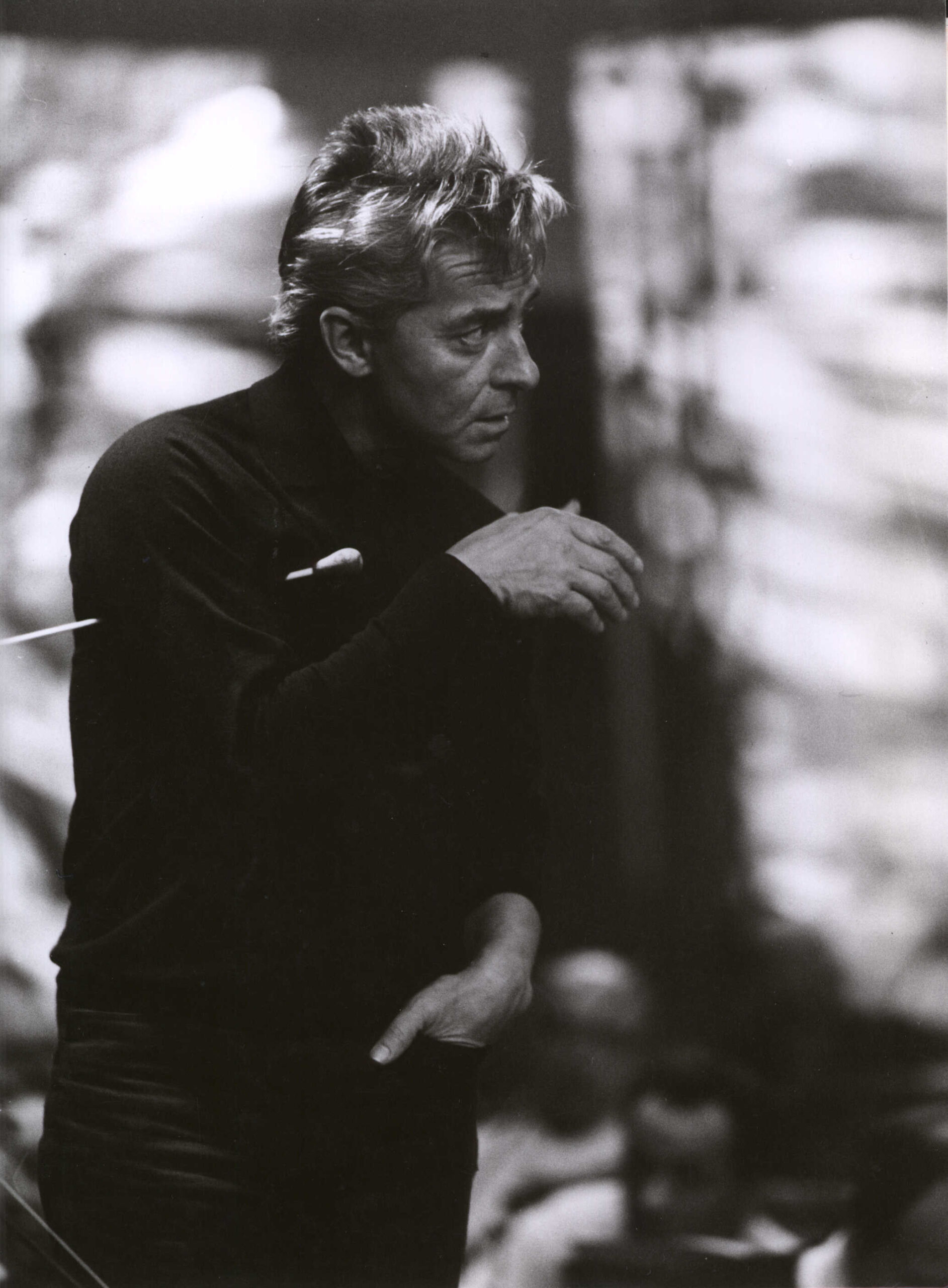
During recordings in Jesus-Christus Kirche, Berlin, 1966 ©Siegfried Lauterwasser; Karajan-Archive
Track 4: Turandot, Act III: Tu che di gel sei cinta – Giacomo Puccini
Our final track takes us to the very moment when Arturo Toscanini stopped the world premiere of Turandot. On 25 April 1926, he reached this point in Giacomo Puccini’s manuscript, lowered his baton, turned to the audience, and said: “Here the maestro laid down his pen.” With those words, one of the most famous premieres in opera history came to an unexpected end.
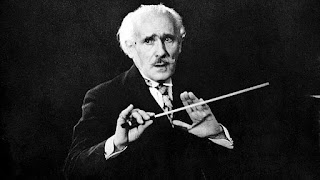
Arturo Toscanini, 25th of April, 1926, Teatro alla Scala, Milan
Puccini had died sixteen months earlier, on 29 November 1924, leaving Turandot unfinished. Although he had completed almost the entire opera, he never finished its emotional climax: the final duet between Calaf and Turandot. Before travelling to Brussels for experimental treatment for throat cancer, he left behind sketches for the ending.
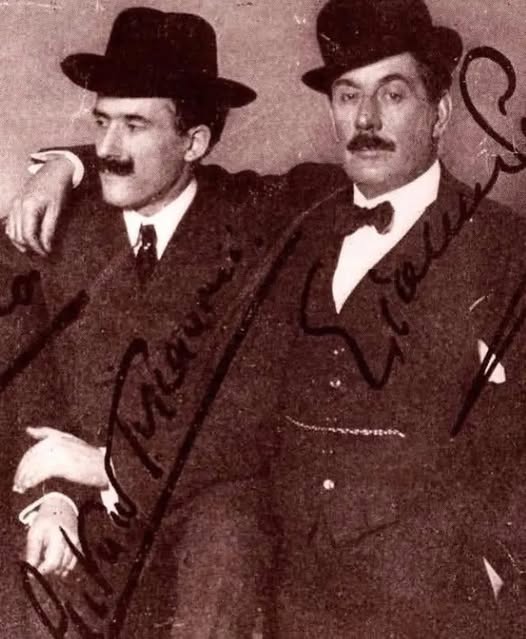
Arturo Toscanini and Giacomo Puccini
Following Puccini’s death, his publisher Ricordi commissioned the composer Franco Alfano to complete the final duet from the surviving sketches. Unlike a symphony, an opera could hardly remain without its final scene, and by the time Turandot premiered at La Scala, Alfano’s ending had already been completed. Yet Toscanini—one of Puccini’s closest friends and the conductor who had premiered several of his operas—chose not to conduct a single note that Puccini himself had not written. From the second performance onwards, however, he conducted a shortened version of Alfano’s ending, which remains the standard performing version in opera houses today.
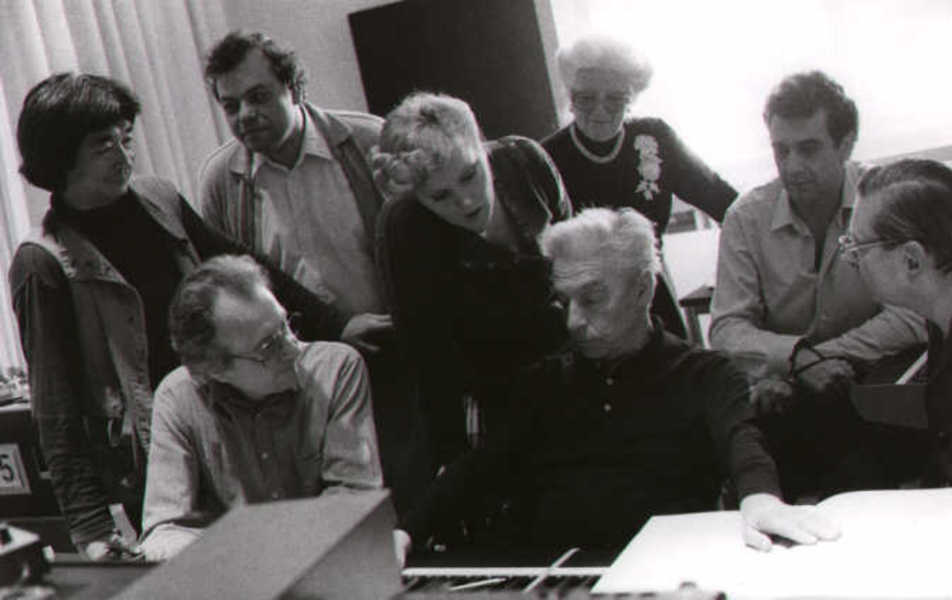
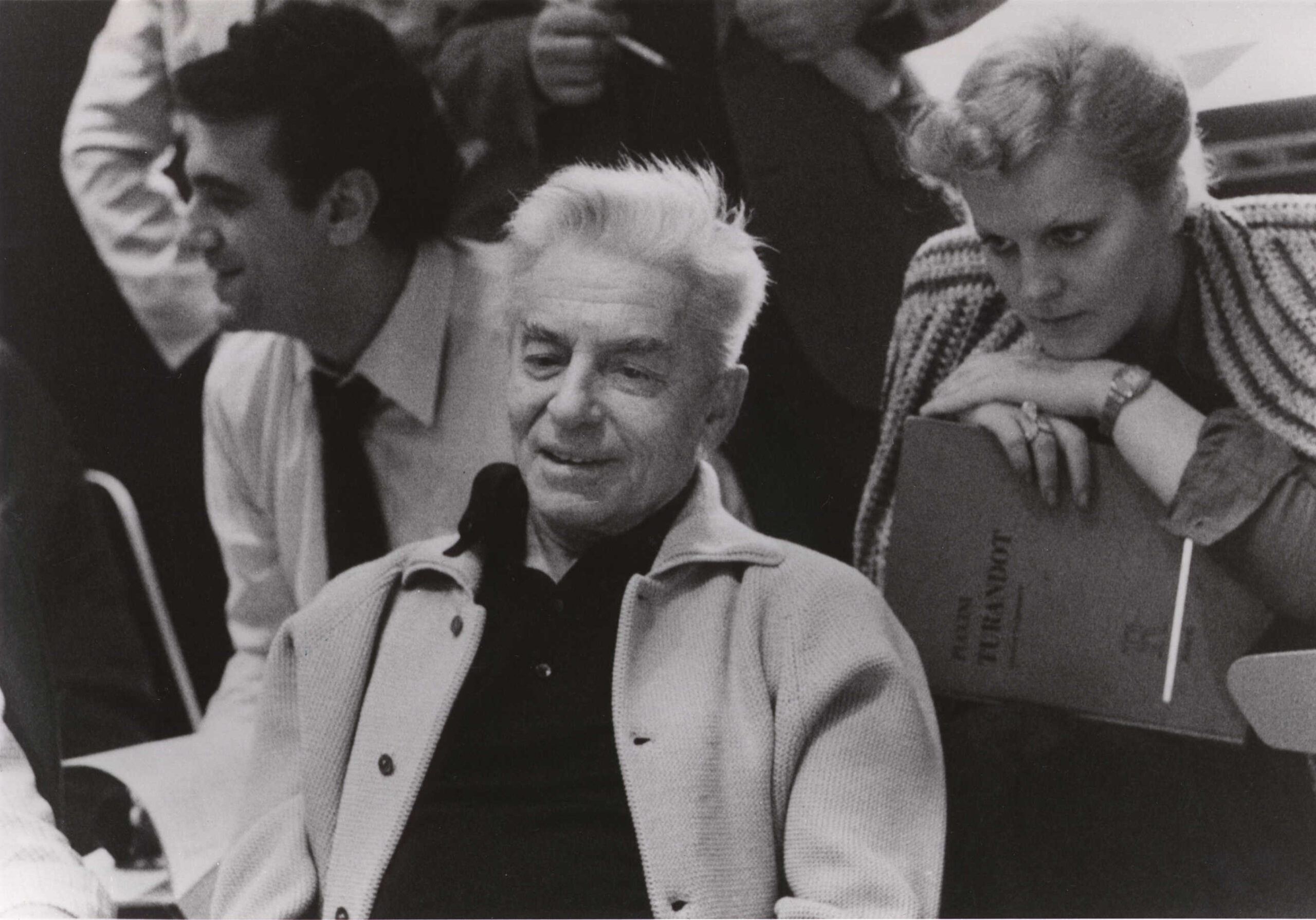
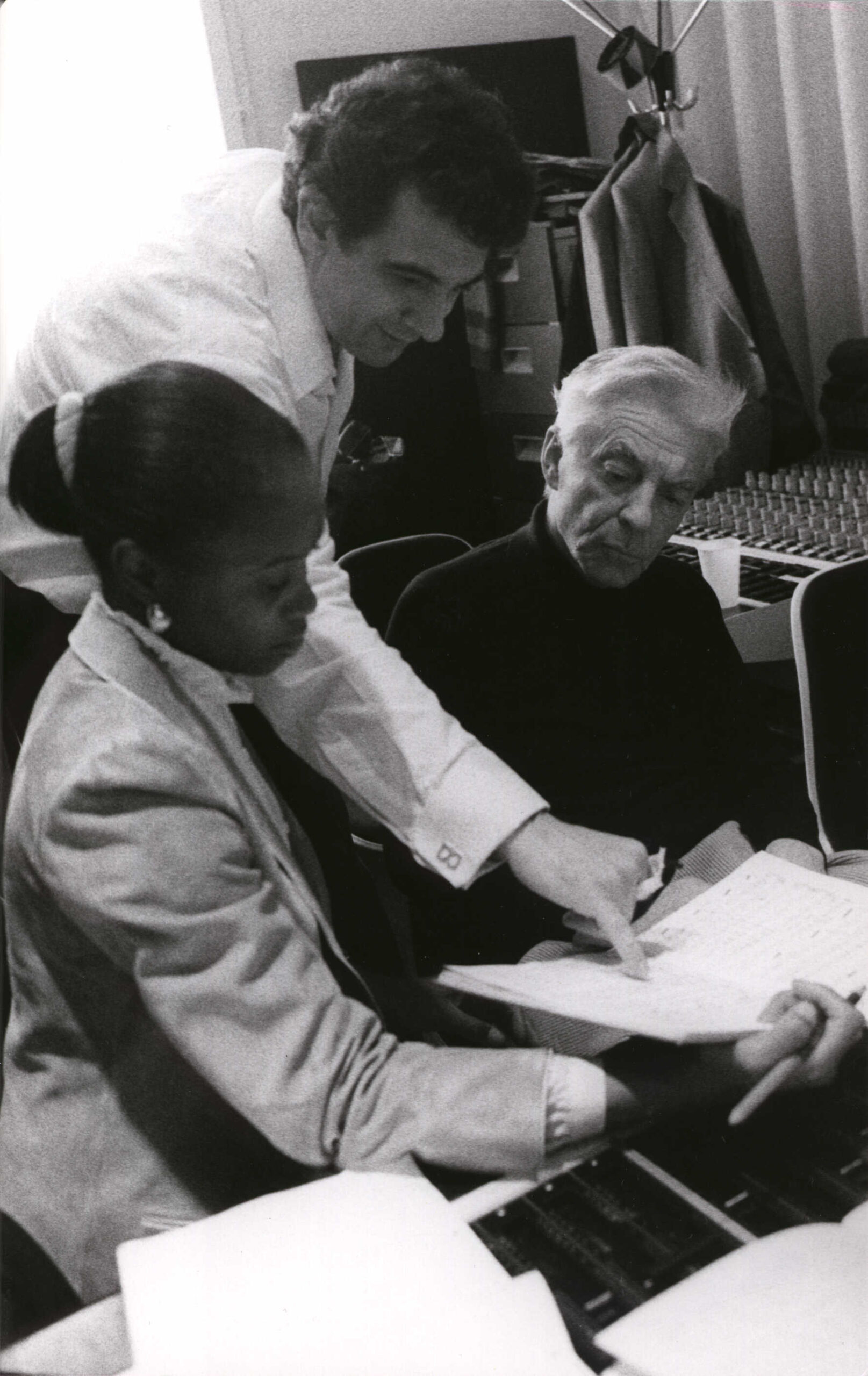
The recording featured here was made at the Musikverein in Vienna between 11 and 18 May 1981 and released by Deutsche Grammophon in 1982. Herbert von Karajan conducted the Wiener Philharmoniker, the Wiener Staatsopernchor and the Wiener Sängerknaben, with Katia Ricciarelli as Turandot, Plácido Domingo as Calaf, Barbara Hendricks as Liù and Ruggero Raimondi as Timur.
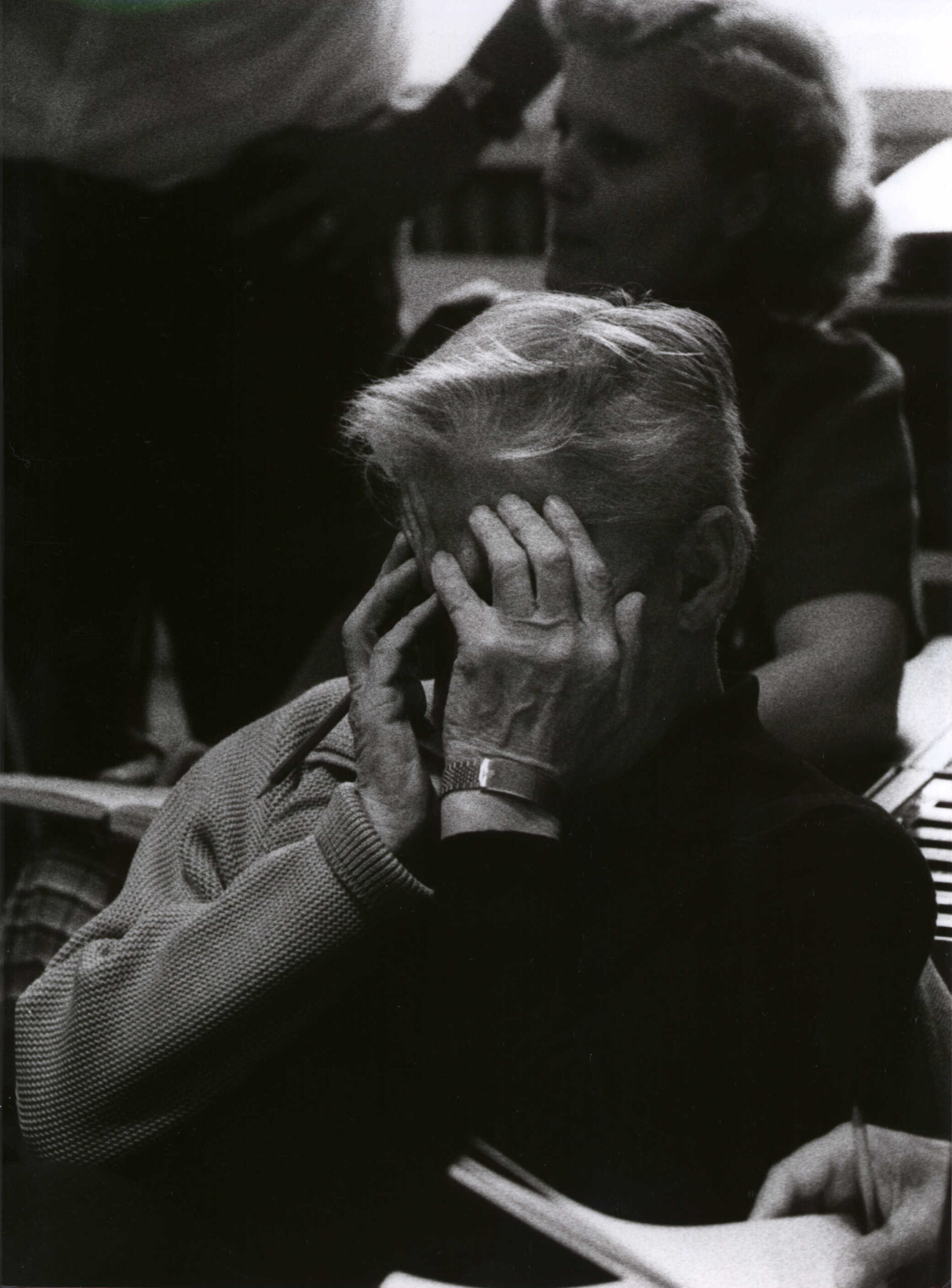
At the time, Karajan was convinced that he would be allowed to film Turandot in Beijing’s Forbidden City, an idea that had become realistic following China’s opening to the West. About eighteen months later, the soundtrack was recorded in Vienna. Richard Osborne describes the sessions as “nightmare sessions”¹, marked by personal and musical tensions. Yet he also calls the orchestral performance “a revelation”¹ and singles out the performances of Plácido Domingo, Ruggero Raimondi and Barbara Hendricks for particular praise. The planned film in Beijing, however, was never realised.
— Pia Bernauer (Karajan Institute)
1 Richard Osborne, Herbert von Karajan: Leben und Musik (München: dtv, 2008), p. 669.